Dogs can experience a variety of skin problems throughout their lives. Skin conditions are among the most common reasons pet owners visit veterinarians. These issues can cause discomfort, itching, hair loss, and even infections if left untreated. Understanding the signs, causes, and treatments of common canine skin conditions can help keep your furry companion healthy and comfortable.
1. Flea Allergy Dermatitis (FAD)


Flea Allergy Dermatitis is one of the most common skin conditions in dogs. It occurs when a dog develops an allergic reaction to flea saliva. Even a single flea bite can trigger intense itching in sensitive dogs.
Symptoms
- Excessive scratching and biting
- Red, inflamed skin
- Hair loss, especially around the tail and lower back
- Scabs and hot spots
Treatment
- Use veterinarian-recommended flea prevention products.
- Treat the home environment to eliminate flea infestations.
- Anti-inflammatory medications may be prescribed to reduce itching.
- Secondary skin infections may require antibiotics.
2. Allergic Dermatitis
Dogs can develop allergies to food ingredients, environmental allergens, or substances they come into contact with.
Symptoms
- Persistent itching
- Red skin
- Ear infections
- Excessive licking of paws
- Skin rashes
Treatment
- Identify and avoid the allergen whenever possible.
- Special hypoallergenic diets may help food-allergic dogs.
- Antihistamines or prescription allergy medications can reduce symptoms.
- Regular bathing with medicated shampoos may provide relief.
3. Hot Spots (Acute Moist Dermatitis)
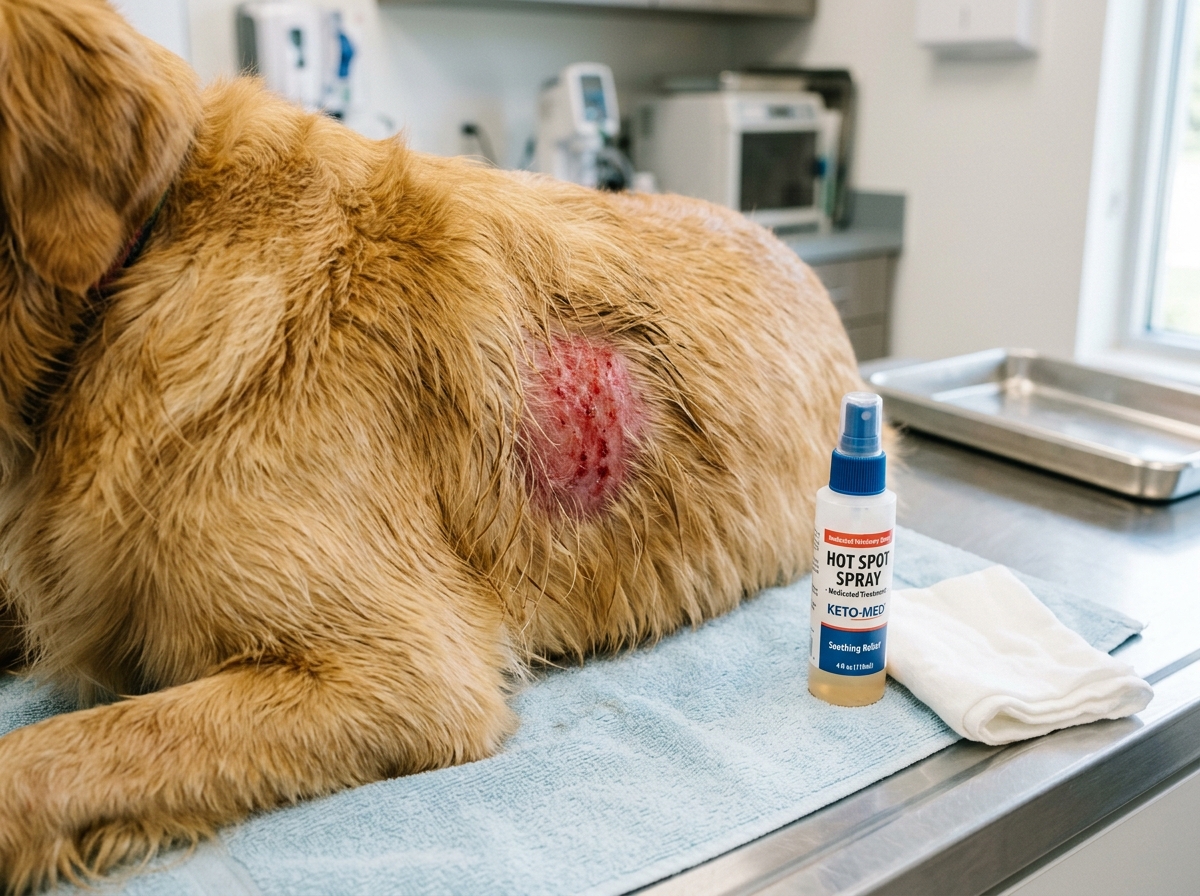
Hot spots are localized areas of inflamed, infected skin that develop rapidly due to excessive licking, scratching, or chewing.
Symptoms
- Red, moist skin lesions
- Hair loss around the affected area
- Pain and irritation
- Foul odor in severe cases
Treatment
- Clip the hair around the lesion.
- Clean and disinfect the area.
- Use prescribed topical or oral antibiotics if infection is present.
- Address the underlying cause, such as allergies or parasites.
4. Mange
Mange is caused by microscopic mites that live on or under the skin. The two most common forms are demodectic mange and sarcoptic mange.
Symptoms
- Hair loss
- Intense itching (especially with sarcoptic mange)
- Thickened or crusty skin
- Skin infections
Treatment
- Veterinary-prescribed mite treatments.
- Medicated shampoos.
- Antibiotics for secondary infections.
- Immune-supportive care when necessary.
5. Ringworm
Despite its name, ringworm is a fungal infection rather than a worm infestation. It is contagious and can spread to humans and other pets.
Symptoms
- Circular patches of hair loss
- Scaly or crusty skin
- Mild itching
- Brittle hair
Treatment
- Antifungal medications.
- Medicated antifungal shampoos.
- Thorough cleaning of the dog’s environment to prevent reinfection.
6. Bacterial Skin Infections
Bacterial infections often develop secondary to allergies, wounds, or other skin conditions.


Symptoms
- Red bumps or pustules
- Crusty skin lesions
- Unpleasant odor
- Excessive scratching
Treatment
- Oral or topical antibiotics prescribed by a veterinarian.
- Antibacterial shampoos.
- Treatment of the underlying skin problem.
7. Yeast Infections
Yeast naturally exists on a dog’s skin, but overgrowth can lead to infection, especially in warm, moist areas.
Symptoms
- Greasy skin
- Strong odor
- Redness and irritation
- Excessive licking and scratching
Treatment
- Antifungal medications.
- Medicated shampoos and wipes.
- Managing allergies or other contributing conditions.
8. Dry Skin
Dry skin can result from environmental conditions, poor nutrition, excessive bathing, or underlying health problems.
Symptoms
- Flaky skin
- Dandruff
- Mild itching
- Dull coat
Treatment
- Provide a balanced diet rich in omega-3 fatty acids.
- Use moisturizing dog shampoos.
- Avoid over-bathing.
- Consult a veterinarian if symptoms persist.
Prevention Tips for Healthy Dog Skin
To minimize the risk of skin problems:
- Maintain regular flea and parasite prevention.
- Feed a high-quality, balanced diet.
- Groom your dog regularly.
- Keep your dog’s bedding and environment clean.
- Schedule routine veterinary checkups.
- Monitor for early signs of itching, redness, or hair loss.
Conclusion
Skin problems in dogs can range from mild irritation to serious infections. Early detection and proper treatment are essential to prevent discomfort and complications. If your dog shows persistent itching, redness, hair loss, or unusual skin changes, consult a veterinarian for an accurate diagnosis and treatment plan. With proper care and preventive measures, most skin conditions can be effectively managed, helping your dog enjoy a healthier and happier life.