As dogs age, their needs change significantly. Just like humans, senior dogs require extra attention, regular health monitoring, and lifestyle adjustments to maintain their comfort and quality of life. While aging is a natural process, proper care can help your furry companion stay healthy, active, and happy for many years.
This comprehensive senior dog care checklist will help pet owners provide the best possible support for their aging canine friends.
Understanding When a Dog Becomes a Senior
A dog is generally considered a senior between the ages of 7 and 10 years, depending on breed and size. Larger breeds tend to age faster than smaller breeds. Common signs of aging include reduced energy levels, graying fur, slower movement, weight changes, and increased sleeping.
Recognizing these changes early allows you to adjust your dog’s care routine accordingly.
1. Schedule Regular Veterinary Checkups


Senior dogs should visit the veterinarian at least twice a year. Regular examinations help detect age-related conditions before they become serious.
Your veterinarian may recommend:
- Blood work and urine testing
- Dental examinations
- Arthritis screenings
- Vision and hearing assessments
- Weight and nutrition evaluations
- Heart and kidney function monitoring
Early detection often leads to more effective treatment and better outcomes.
2. Maintain a Balanced Diet
Nutrition plays a critical role in senior dog health.
Consider the following dietary guidelines:
- Choose food formulated specifically for senior dogs.
- Monitor calorie intake to prevent obesity.
- Ensure adequate protein to maintain muscle mass.
- Include omega-3 fatty acids for joint and brain health.
- Provide fresh water at all times.
If your dog has health issues such as diabetes, kidney disease, or allergies, consult your veterinarian about specialized diets.
3. Keep Weight Under Control
Excess weight places additional strain on aging joints and organs. Senior dogs often become less active, making weight management even more important.
To maintain a healthy weight:
- Measure food portions carefully.
- Limit high-calorie treats.
- Track weight regularly.
- Encourage gentle daily exercise.
A healthy weight can significantly improve mobility and longevity.
4. Support Joint and Mobility Health
Many senior dogs experience arthritis and joint discomfort.
Ways to support mobility include:
- Providing orthopedic dog beds
- Using non-slip rugs on hard floors
- Installing ramps for stairs or vehicles
- Discussing joint supplements with your veterinarian
- Maintaining regular low-impact exercise
Activities like walking and swimming can help keep joints flexible without causing excessive strain.
5. Prioritize Dental Care
Dental disease is one of the most common health issues in older dogs.
A good dental care routine includes:
- Daily tooth brushing
- Dental chews approved by your veterinarian
- Professional dental cleanings
- Monitoring for bad breath, bleeding gums, or loose teeth
Healthy teeth and gums contribute to overall health and comfort.
6. Adjust Exercise Routines


Although senior dogs may not have the same stamina they once did, regular exercise remains essential.
Recommended activities include:
- Short daily walks
- Gentle play sessions
- Swimming
- Light stretching exercises
Watch for signs of fatigue and allow plenty of rest periods.
7. Monitor Behavioral Changes
Behavioral changes can sometimes indicate medical issues.
Pay attention to:
- Increased confusion or disorientation
- Changes in sleeping patterns
- Anxiety or irritability
- House-training accidents
- Excessive vocalization
These symptoms may be related to cognitive decline, pain, or other health concerns and should be discussed with a veterinarian.
8. Create a Comfortable Living Environment
Making your home senior-friendly can improve your dog’s comfort and safety.
Helpful adjustments include:
- Soft orthopedic bedding
- Easy access to food and water
- Elevated feeding bowls
- Warm resting areas
- Adequate lighting during nighttime
Small environmental changes can make a significant difference in daily life.
9. Keep Mental Stimulation a Priority
Mental exercise is just as important as physical activity.
Ways to keep your senior dog’s mind active:
- Puzzle toys
- Training refreshers
- Interactive games
- New scents and experiences
- Gentle social interaction
Mental stimulation may help slow cognitive decline and reduce boredom.
10. Watch for Common Senior Health Issues
Be aware of conditions frequently seen in aging dogs:
- Arthritis
- Heart disease
- Kidney disease
- Dental disease
- Diabetes
- Cancer
- Vision loss
- Hearing impairment
- Canine cognitive dysfunction
Prompt veterinary attention can often improve management and quality of life.
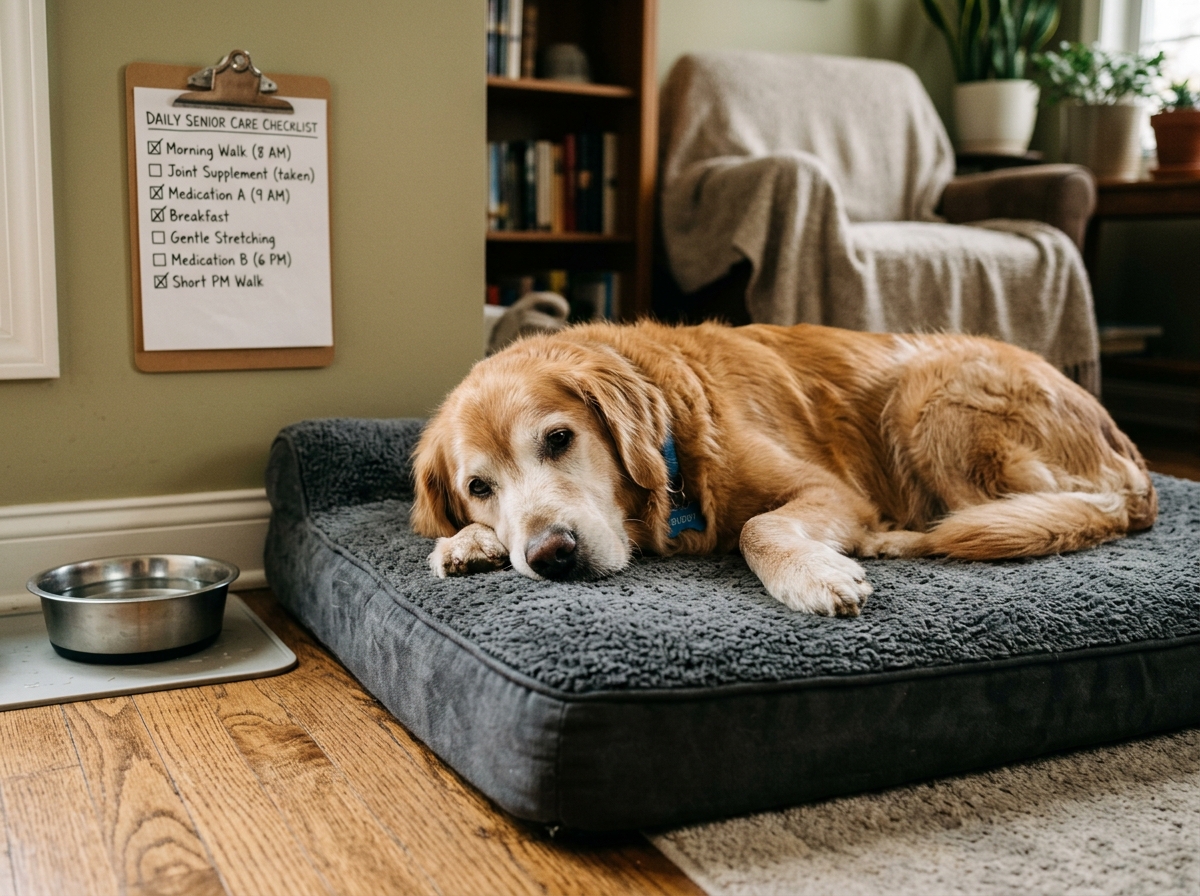
Daily Senior Dog Care Checklist
Use this quick checklist each day:
✔ Provide fresh food and water
✔ Monitor appetite and drinking habits
✔ Take a gentle walk or exercise session
✔ Check for signs of pain or stiffness
✔ Brush teeth or provide dental care
✔ Offer mental stimulation
✔ Ensure a comfortable resting area
✔ Monitor bathroom habits
✔ Give medications or supplements as prescribed
✔ Spend quality time together
Conclusion
Caring for a senior dog requires patience, attention, and a proactive approach to health management. By following this senior dog care checklist, you can help your aging companion remain comfortable, active, and content throughout their golden years. Regular veterinary care, proper nutrition, exercise, and plenty of love are the foundation of a happy and healthy life for senior dogs.