Dogs often experience itching due to allergies, dry skin, insect bites, environmental irritants, or minor skin infections. Constant scratching can make your pet uncomfortable and may even lead to skin damage. Fortunately, several safe and natural home remedies can help soothe your dog’s itchy skin and provide relief.
Understanding the Causes of Dog Itching
Before trying any remedy, it’s important to identify the potential cause of the itching. Common causes include:
- Seasonal allergies
- Flea bites
- Dry skin
- Food sensitivities
- Environmental irritants
- Minor fungal or bacterial skin issues
If your dog has severe itching, open wounds, hair loss, or signs of infection, consult a veterinarian immediately.
1. Oatmeal Bath for Soothing Relief


Oatmeal is one of the most effective natural remedies for itchy skin. It contains anti-inflammatory compounds that help calm irritation and reduce redness.
How to Use:
- Grind plain oatmeal into a fine powder.
- Mix it with warm bath water.
- Let your dog soak for 10–15 minutes.
- Rinse gently and pat dry.
An oatmeal bath can provide immediate relief and moisturize dry skin.
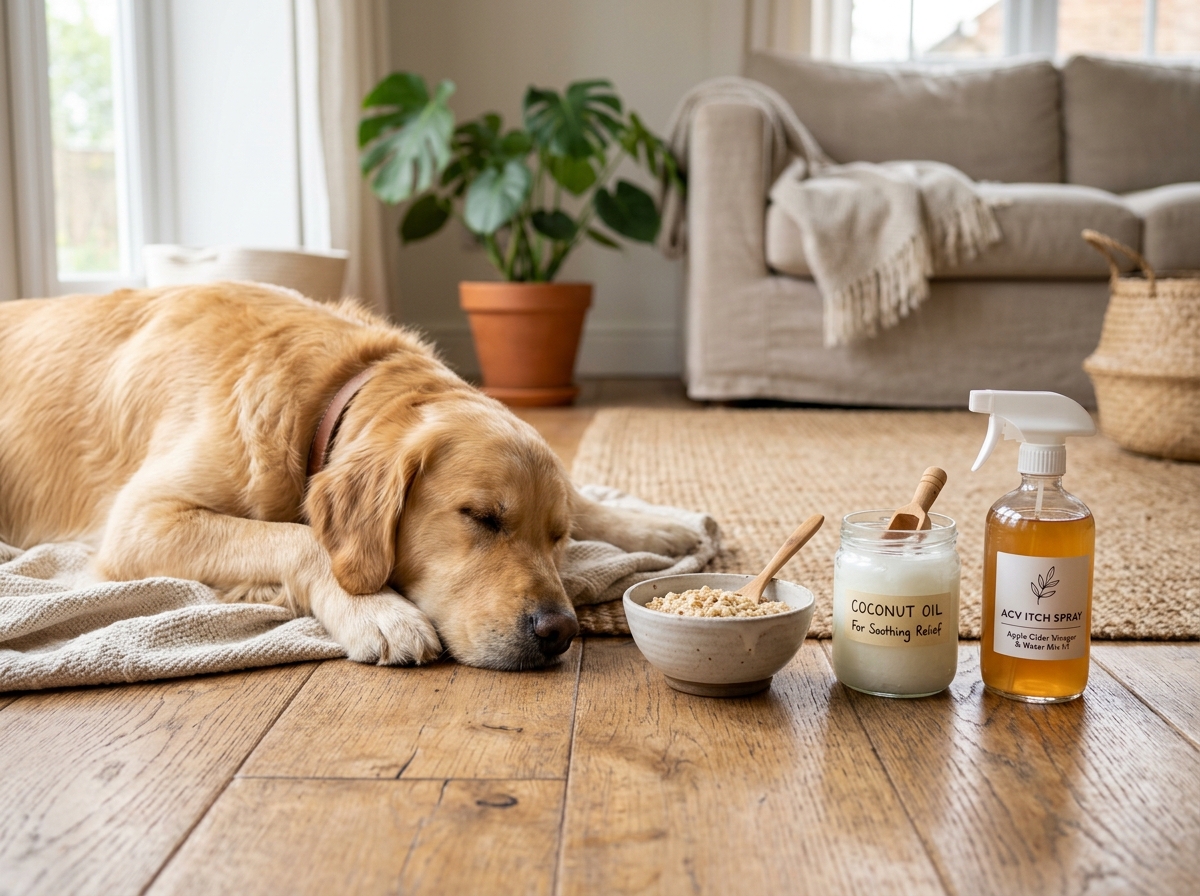
2. Coconut Oil Application
Coconut oil has moisturizing and antimicrobial properties that can help soothe dry, itchy skin.
How to Use:
- Apply a small amount directly to itchy areas.
- Massage gently into the skin.
- Allow it to absorb naturally.
Use sparingly, as excessive amounts can make the coat greasy.
3. Apple Cider Vinegar Spray
Apple cider vinegar can help relieve itching caused by mild yeast or bacterial issues.
How to Use:
- Mix equal parts apple cider vinegar and water.
- Pour into a spray bottle.
- Lightly spray affected areas.
Important: Do not use on open wounds or broken skin, as it may cause stinging.
4. Aloe Vera Gel
Pure aloe vera gel provides cooling relief and reduces inflammation.
How to Use:
- Apply a thin layer to itchy spots.
- Ensure the product is free from alcohol and artificial additives.
- Prevent your dog from licking excessive amounts.
5. Chamomile and Green Tea Soak
Chamomile and green tea contain natural anti-inflammatory compounds that can calm irritated skin.
How to Use:
- Brew several tea bags in hot water.
- Allow the tea to cool completely.
- Add it to bath water or apply directly with a clean cloth.
This remedy works particularly well for localized itching.
6. Omega-3 Rich Diet
Healthy skin starts from within. Omega-3 fatty acids can improve skin health and reduce inflammation.
Good Sources:
- Fish oil
- Salmon
- Sardines
- Veterinary-approved omega-3 supplements
Always follow recommended dosages based on your dog’s size.
7. Baking Soda Paste


Baking soda may help reduce itching and redness in small affected areas.
How to Use:
- Mix baking soda with water to form a paste.
- Apply to itchy areas for a few minutes.
- Rinse thoroughly.
Avoid using this treatment too frequently, as it may dry out the skin.
Preventing Future Itching
To minimize recurring skin problems:
- Brush your dog regularly.
- Maintain flea prevention treatments.
- Feed a balanced diet.
- Wash bedding frequently.
- Use gentle, dog-safe shampoos.
- Keep your home free from common allergens when possible.
When to See a Veterinarian
Home remedies are suitable for mild itching, but veterinary care is necessary if your dog experiences:
- Severe or persistent scratching
- Hair loss
- Bleeding or open sores
- Strong skin odor
- Swelling or redness
- Signs of infection
Conclusion
Many cases of mild dog itching can be managed with natural remedies such as oatmeal baths, coconut oil, aloe vera, chamomile soaks, and omega-3 supplements. While these remedies can provide comfort and support skin health, monitoring your dog’s condition is essential. If symptoms persist or worsen, professional veterinary advice should always be sought to ensure your pet receives the proper treatment.