Dogs are beloved members of many families, and keeping them healthy requires more than regular exercise and veterinary care. Many common foods that are perfectly safe for humans can be dangerous—or even deadly—for dogs. Understanding which foods to avoid can help prevent accidental poisoning and protect your pet’s well-being.
Why Some Human Foods Are Dangerous for Dogs
A dog’s digestive system works differently from a human’s. Certain substances that humans can process without problems may cause severe reactions in dogs, including vomiting, diarrhea, organ failure, and neurological issues. In some cases, even small amounts of toxic foods can lead to serious health emergencies.
Chocolate


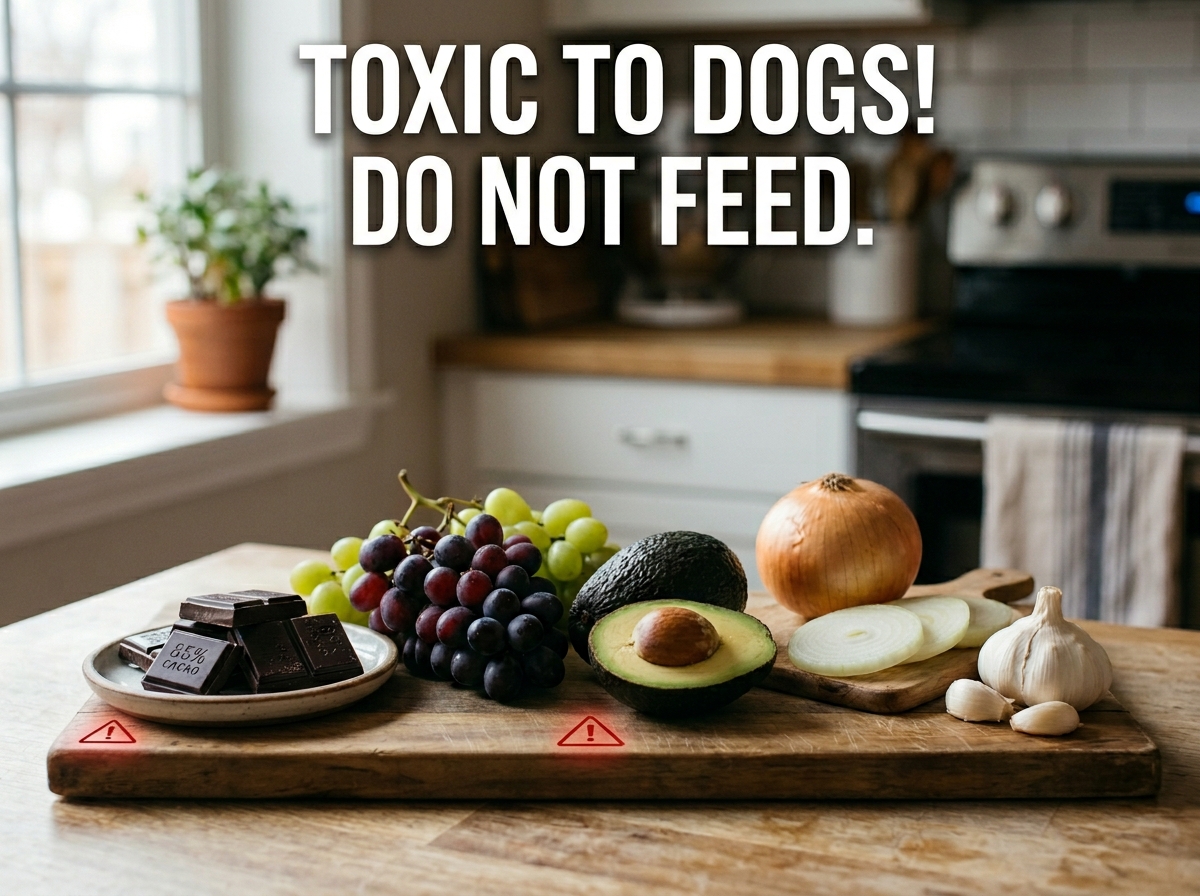
Chocolate contains theobromine and caffeine, two compounds that dogs cannot metabolize effectively. Dark chocolate and baking chocolate contain the highest levels and pose the greatest risk.
Symptoms of Chocolate Poisoning:
- Vomiting
- Diarrhea
- Rapid heart rate
- Tremors
- Seizures
If a dog consumes chocolate, immediate veterinary attention is recommended.
Grapes and Raisins
Even small quantities of grapes or raisins can cause kidney failure in some dogs. Researchers still do not fully understand why these fruits are toxic, but the risk is significant enough that they should always be kept out of reach.
Symptoms:
- Vomiting
- Loss of appetite
- Lethargy
- Increased thirst
- Kidney damage
Onions, Garlic, and Chives
These foods belong to the allium family and can damage a dog’s red blood cells, leading to anemia. They are harmful whether raw, cooked, powdered, or dehydrated.
Signs of Toxicity:
- Weakness
- Pale gums
- Fatigue
- Rapid breathing
Xylitol
Xylitol is an artificial sweetener commonly found in sugar-free gum, candy, baked goods, and some peanut butter brands. It can cause a dangerous drop in blood sugar levels and may lead to liver failure.
Symptoms:
- Vomiting
- Loss of coordination
- Seizures
- Collapse
Alcohol and Caffeinated Drinks
Alcohol and caffeine can have severe effects on a dog’s nervous system and internal organs. Even small amounts may cause poisoning.
Avoid giving dogs:
- Beer
- Wine
- Liquor
- Coffee
- Tea
- Energy drinks
Macadamia Nuts


Macadamia nuts can cause weakness, tremors, vomiting, and difficulty walking in dogs. Symptoms often appear within 12 hours of ingestion and can last up to 48 hours.
Avocado
Avocados contain a substance called persin, which may cause digestive upset in dogs. While the flesh is less toxic than other parts, the pit can also present a choking hazard and intestinal blockage risk.
Raw Dough with Yeast
Yeast dough can expand inside a dog’s stomach, causing painful bloating and potentially life-threatening complications. As the dough ferments, it can also produce alcohol, leading to alcohol poisoning.
Foods High in Fat
Fatty foods such as bacon, fried chicken, and greasy leftovers can trigger pancreatitis, a serious inflammation of the pancreas.
Common Symptoms:
- Vomiting
- Abdominal pain
- Loss of appetite
- Fever
What to Do If Your Dog Eats a Toxic Food
If you suspect your dog has consumed a toxic substance:
- Remove access to the food immediately.
- Determine how much was eaten.
- Contact your veterinarian right away.
- Monitor your dog for symptoms.
- Do not induce vomiting unless instructed by a veterinary professional.
Conclusion
Many everyday foods can pose serious health risks to dogs. Chocolate, grapes, raisins, onions, garlic, xylitol, alcohol, macadamia nuts, and other common items should never be given to pets. By knowing which foods are dangerous and acting quickly in an emergency, dog owners can help ensure their furry companions remain healthy and safe for years to come.
The article includes images under two headings: Chocolate and Macadamia Nuts.