Choosing the right food for your dog is one of the most important decisions you’ll make as a pet owner. With countless options available, the debate between wet food and dry food remains a common topic among dog lovers. Both types of food offer unique benefits and potential drawbacks, making it essential to understand how each option affects your dog’s health, lifestyle, and nutritional needs.
Understanding Wet Dog Food


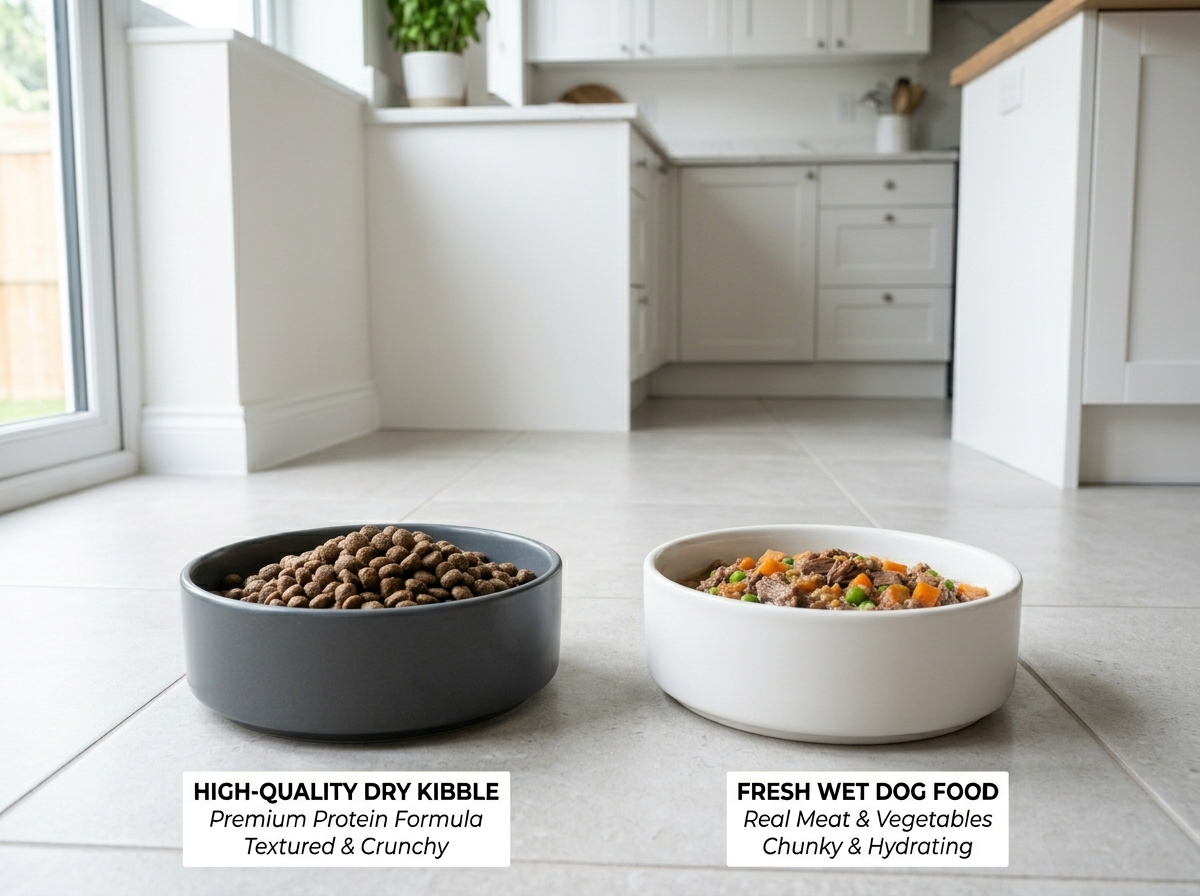
Wet dog food, often sold in cans, pouches, or trays, contains a higher moisture content than dry kibble. Typically consisting of around 70-80% water, wet food offers a soft texture and strong aroma that many dogs find irresistible.
Benefits of Wet Dog Food
- Higher Moisture Content: Helps keep dogs hydrated, especially those who drink less water.
- Enhanced Taste and Aroma: Often more appealing to picky eaters.
- Easier to Chew: Ideal for puppies, senior dogs, or dogs with dental issues.
- Can Support Weight Management: The higher water content may help dogs feel fuller while consuming fewer calories.
Drawbacks of Wet Dog Food
- Generally more expensive than dry food.
- Shorter shelf life after opening.
- Can contribute to faster plaque buildup if dental hygiene is neglected.
- Less convenient for storage and travel.
Understanding Dry Dog Food
Dry dog food, commonly known as kibble, is one of the most popular feeding choices among dog owners. It contains significantly less moisture, usually around 10%, and offers a convenient, cost-effective feeding solution.
Benefits of Dry Dog Food
- Affordable: Typically costs less per serving than wet food.
- Convenient Storage: Easy to store and serve.
- Supports Dental Health: Chewing kibble may help reduce plaque accumulation.
- Long Shelf Life: Stays fresh longer when properly stored.
Drawbacks of Dry Dog Food
- Lower moisture content.
- Some dogs find it less appetizing.
- May be harder for dogs with dental problems or missing teeth to chew.
Nutritional Comparison: Wet Food vs Dry Food


When comparing wet and dry food, nutrition should be the primary consideration. High-quality wet and dry dog foods can both provide complete and balanced nutrition when formulated according to veterinary standards.
| Factor | Wet Food | Dry Food |
|---|---|---|
| Moisture Content | Very High | Low |
| Cost | Higher | Lower |
| Shelf Life | Shorter After Opening | Longer |
| Taste Appeal | Excellent | Moderate |
| Dental Benefits | Limited | Better |
| Storage Convenience | Lower | Higher |
| Hydration Support | Excellent | Limited |
The quality of ingredients matters far more than whether the food is wet or dry. Look for products containing real meat, healthy fats, vitamins, and minerals while avoiding excessive fillers and artificial additives.
Which Option Is Best for Your Dog?
The ideal choice depends on your dog’s specific needs:
Wet Food May Be Better If Your Dog:
- Is a picky eater.
- Has dental problems.
- Needs extra hydration.
- Is recovering from illness.
- Is a senior dog with chewing difficulties.
Dry Food May Be Better If Your Dog:
- Has healthy teeth and gums.
- Requires a budget-friendly feeding plan.
- Benefits from portion-controlled feeding.
- Is active and healthy with no special dietary concerns.
Can You Mix Wet and Dry Dog Food?
Absolutely. Many veterinarians and pet nutritionists recommend combining wet and dry food to provide the advantages of both. Mixed feeding can improve palatability, increase hydration, and offer texture variety while helping manage feeding costs.
When mixing foods, be sure to adjust portions appropriately to avoid overfeeding and maintain a balanced calorie intake.
Final Thoughts
There is no universal winner in the wet food versus dry food debate. Both options can support a healthy, happy dog when they are nutritionally complete and suited to your pet’s individual needs. Consider your dog’s age, health condition, activity level, preferences, and your budget when making a decision. For personalized guidance, consult your veterinarian to determine the best feeding strategy for your furry companion.
A balanced diet, regular exercise, and routine veterinary care will always play a greater role in your dog’s overall well-being than the choice between wet and dry food alone.