Dogs may not speak with words, but they communicate constantly through their body language. Understanding what your dog is trying to tell you can strengthen your bond, improve training, and help prevent misunderstandings. From wagging tails to ear positions, every movement can reveal how a dog is feeling.
Why Dog Body Language Matters
Dogs rely heavily on nonverbal communication. They use their posture, facial expressions, tail movements, and vocalizations to express emotions such as happiness, fear, excitement, stress, and confidence. Learning to recognize these signals allows owners to respond appropriately and create a safer, more comfortable environment for their pets.
Understanding Tail Movements
A wagging tail does not always mean a dog is happy. The position and speed of the wag provide important clues:
- Loose, wide wag: Usually indicates friendliness and excitement.
- High, stiff wag: Can signal alertness, confidence, or even a challenge.
- Low wag: May suggest uncertainty or nervousness.
- Tail tucked between the legs: Often indicates fear, anxiety, or submission.
Pay attention to the entire body, not just the tail, to accurately interpret a dog’s emotions.
Reading Ear Positions
A dog’s ears can reveal a great deal about its mood:
- Ears forward: Alert, interested, or focused.
- Relaxed ears: Calm and comfortable.
- Ears pinned back: Fearful, anxious, or showing appeasement.
- Rapid ear movement: Processing sounds and environmental information.
Because ear shapes vary among breeds, it’s important to learn what “normal” looks like for your dog.
Facial Expressions and Eye Contact
Dogs communicate through subtle facial cues:
- Soft eyes and relaxed mouth: Content and comfortable.
- Wide eyes with visible whites (“whale eye”): Stress, fear, or discomfort.
- Lip licking when not eating: Anxiety or uncertainty.
- Yawning when not tired: Stress-relief behavior.
- Direct, hard stare: May signal a challenge or discomfort.
Recognizing these signs early can help prevent situations from escalating.
Body Posture Signals
The overall posture of a dog often provides the clearest picture of its emotional state.
Relaxed Dog
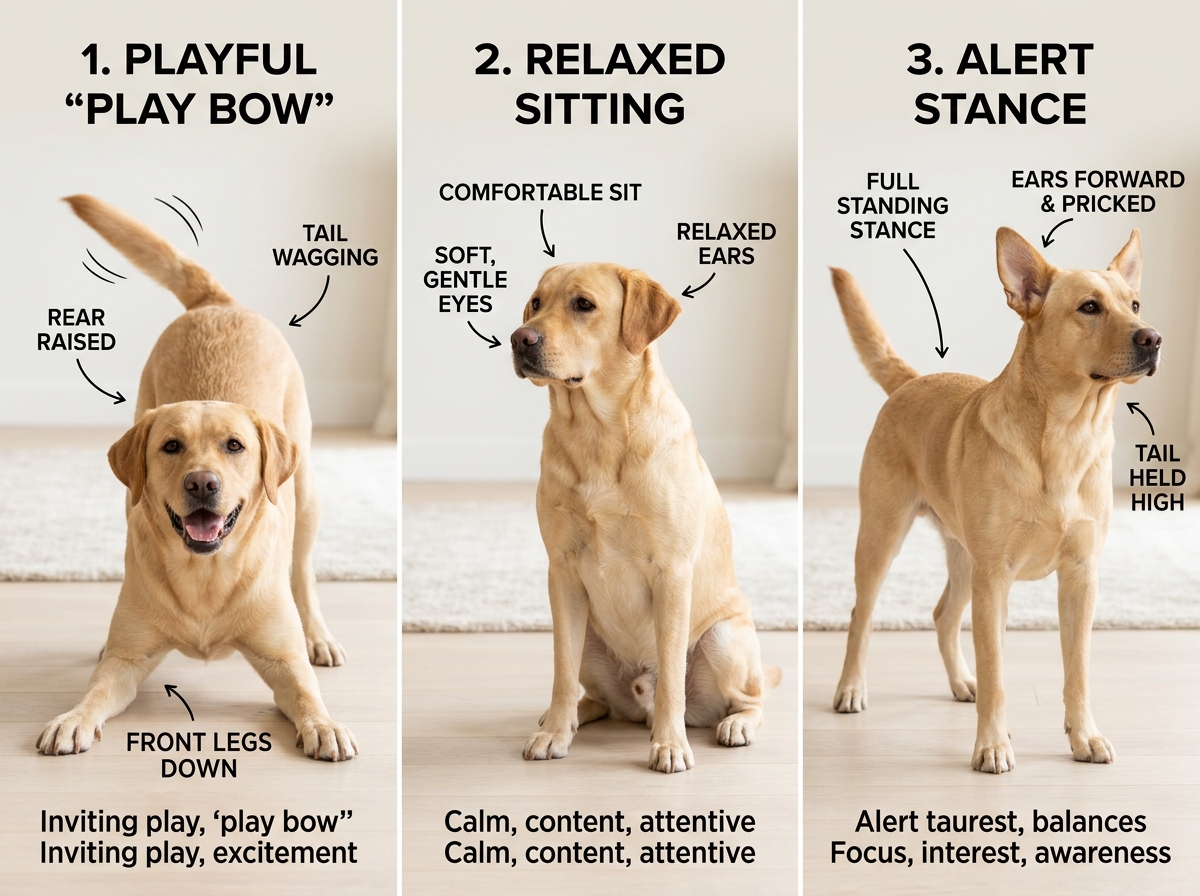
A relaxed dog has a loose body, natural tail position, and comfortable facial expression. This indicates that the dog feels safe and secure.
Playful Dog
A classic “play bow”—front legs stretched forward with the rear end raised—is an invitation to play and interact.
Fearful Dog
Fearful dogs may crouch low, tuck their tails, flatten their ears, and avoid eye contact. Some may freeze in place when scared.
Confident Dog
Confident dogs stand tall with balanced weight distribution and a relaxed but attentive posture.
Signs of Stress and Anxiety
Dogs often show subtle signs of stress before displaying more obvious reactions. Common indicators include:
- Excessive panting without exercise
- Lip licking
- Yawning
- Pacing
- Shaking off as if wet
- Avoiding eye contact
- Sudden scratching
Recognizing these early warning signs can help you remove your dog from uncomfortable situations.
How to Respond to Dog Body Language
When your dog appears relaxed and happy, continue positive interactions. If your dog shows signs of fear or stress:
- Give them space.
- Avoid forcing interactions.
- Speak calmly and move slowly.
- Remove stressful triggers when possible.
- Reward calm behavior with praise and treats.
Building trust takes time, and respecting your dog’s communication is essential.
Conclusion
Understanding dog body language is one of the most valuable skills a pet owner can develop. By observing your dog’s tail, ears, eyes, facial expressions, and overall posture, you can better understand their emotions and needs. The more you learn to “speak dog,” the stronger your relationship with your canine companion will become.