Potty training is one of the first and most important lessons your puppy will learn. While every dog develops at their own pace, most puppies can become reliably house-trained within 4 to 6 months when given consistent guidance, patience, and a structured routine. Understanding the typical potty training timeline can help you set realistic expectations and celebrate progress along the way.
Week 1–2: Introducing the Basics


The first two weeks are all about creating a routine. Your puppy is just beginning to understand where and when they should go to the bathroom.
What to Expect
- Frequent accidents inside the house.
- Limited bladder control.
- Confusion about potty locations.
Your Goals
- Take your puppy outside every 1–2 hours.
- Establish a designated potty area.
- Use a consistent cue such as “Go potty.”
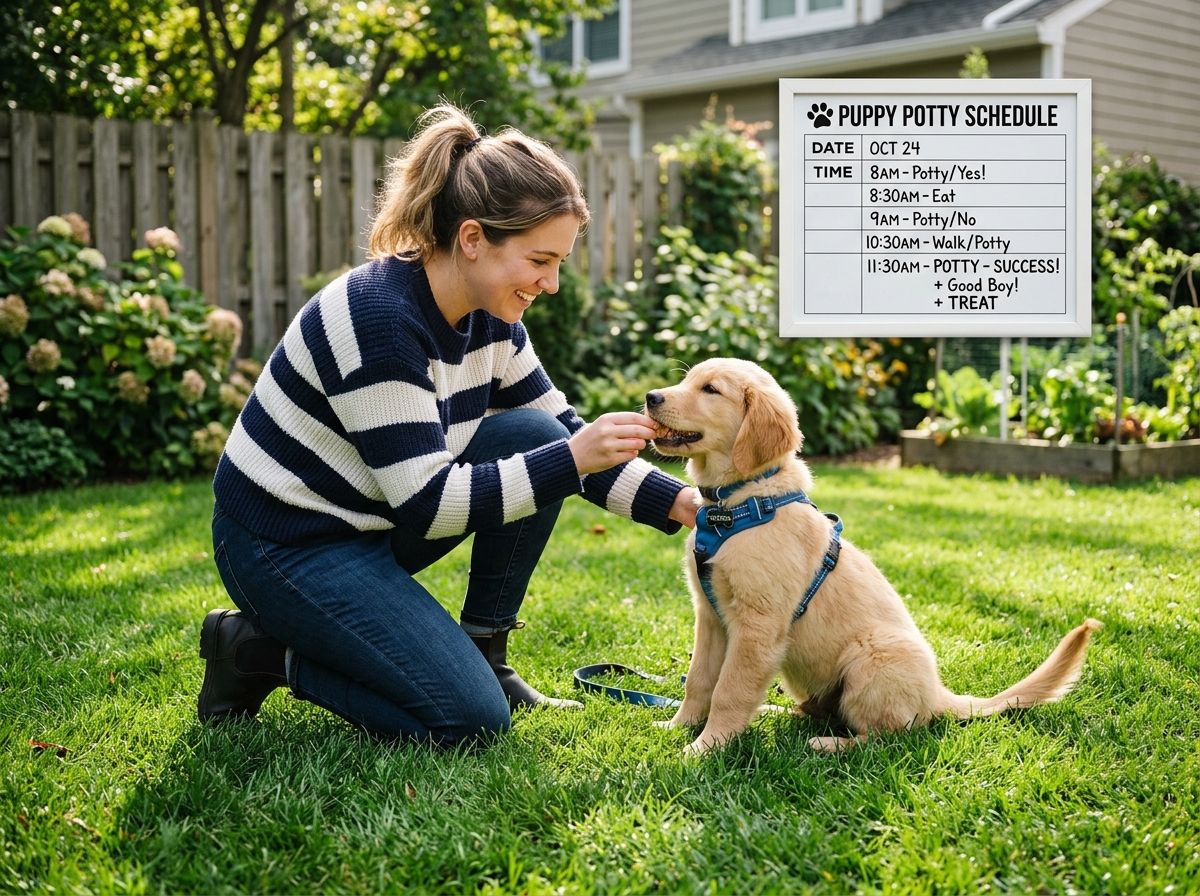
- Reward successful bathroom trips immediately with praise and treats.
Helpful Tip
Take your puppy outside after:
- Waking up
- Eating meals
- Drinking water
- Playing
- Naps
Consistency during this stage lays the foundation for future success.
Week 3–4: Building Good Habits
By the third and fourth week, many puppies begin associating the outdoor potty area with bathroom time.
What to Expect
- Fewer indoor accidents.
- Better understanding of the routine.
- Occasional signals such as sniffing, circling, or heading toward the door.
Your Goals
- Continue frequent potty breaks.
- Closely supervise indoor activities.
- Introduce crate training if you haven’t already.
- Reinforce every successful outdoor potty session.
Helpful Tip
Keep a potty journal to track your puppy’s bathroom schedule. Patterns often emerge, making it easier to anticipate their needs.
Month 2–3: Developing Bladder Control
During this phase, puppies start gaining better physical control over their bladder and bowels.
What to Expect
- Longer periods between potty breaks.
- More reliable bathroom habits.
- Improved understanding of household rules.
Your Goals
- Gradually increase the time between potty outings.
- Continue using rewards and positive reinforcement.
- Encourage your puppy to signal when they need to go outside.
Helpful Tip
A common guideline is that puppies can hold their bladder for approximately one hour per month of age, although individual puppies may vary.
Month 4–5: Increased Reliability


By four to five months of age, many puppies show significant improvement and have far fewer accidents.
What to Expect
- Consistent use of the designated potty area.
- Clearer communication signals.
- Better overnight bladder control.
Your Goals
- Maintain the established routine.
- Begin offering slightly more freedom around the house.
- Continue supervising in new environments.
Helpful Tip
Avoid becoming complacent. Even puppies that are doing well can experience occasional setbacks during growth stages.
Month 6 and Beyond: Fully House-Trained
Most puppies are considered reliably house-trained around six months of age, though larger breeds and individual dogs may mature at different rates.
Signs Your Puppy Is House-Trained
- Rare or no indoor accidents.
- Consistently signals when they need to go outside.
- Can comfortably wait between scheduled potty breaks.
- Understands the designated potty location.
Your Goals
- Maintain regular bathroom opportunities.
- Continue rewarding good behavior occasionally.
- Stay alert during major routine changes such as travel or moving.
Common Potty Training Challenges
Frequent Accidents
Review your schedule and increase the frequency of potty breaks.
Regression
Temporary setbacks are common during teething, growth spurts, or changes in routine.
Nighttime Accidents
Limit water shortly before bedtime and schedule a final potty trip before sleep.
Excitement Urination
Young puppies may urinate when overly excited. This behavior often improves with age and confidence.
Sample Daily Potty Schedule
| Time | Activity |
|---|---|
| 7:00 AM | Wake up and potty break |
| 7:15 AM | Breakfast |
| 7:30 AM | Potty break |
| 9:00 AM | Potty break |
| 12:00 PM | Lunch and potty break |
| 2:00 PM | Potty break |
| 5:00 PM | Dinner and potty break |
| 7:00 PM | Potty break |
| 9:00 PM | Final potty break |
| Bedtime | Sleep |
Final Thoughts
Successful puppy potty training is a gradual process that requires consistency, patience, and positive reinforcement. While some puppies learn quickly, others may need additional time. By following a structured timeline and celebrating small victories, you’ll help your puppy develop lifelong bathroom habits and create a cleaner, happier home for everyone.