Summer brings longer days, outdoor adventures, and plenty of opportunities for dogs to enjoy walks and playtime. However, the hot weather can pose serious risks to your dog’s paws. Pavements, sand, and other surfaces can become dangerously hot, leading to burns, discomfort, and injuries. Understanding how to care for your dog’s paws during summer is essential for keeping them healthy and happy.
Why Summer Heat Is Dangerous for Dog Paws


A dog’s paw pads are tough, but they are not immune to extreme heat. During summer, asphalt and concrete can reach temperatures much higher than the surrounding air. For example, when the air temperature is around 85°F (29°C), pavement temperatures can exceed 130°F (54°C), which is hot enough to cause burns within minutes.
Common signs of paw damage include:
- Limping or reluctance to walk
- Excessive licking or chewing of paws
- Redness or discoloration
- Blisters or peeling skin
- Cracked or dry paw pads
If you notice any of these symptoms, inspect your dog’s paws and seek veterinary advice if the injury appears severe.
Tips to Protect Your Dog’s Paws During Summer
Walk During Cooler Hours
Schedule walks early in the morning or later in the evening when surfaces are cooler. Avoid midday walks when the sun is at its strongest.
Test the Ground Temperature
Before heading out, place the back of your hand on the pavement for seven seconds. If it’s too hot for your hand, it’s too hot for your dog’s paws.
Stick to Grass and Shaded Paths
Whenever possible, choose grassy areas, dirt trails, or shaded routes. These surfaces remain significantly cooler than concrete and asphalt.
Use Protective Dog Boots
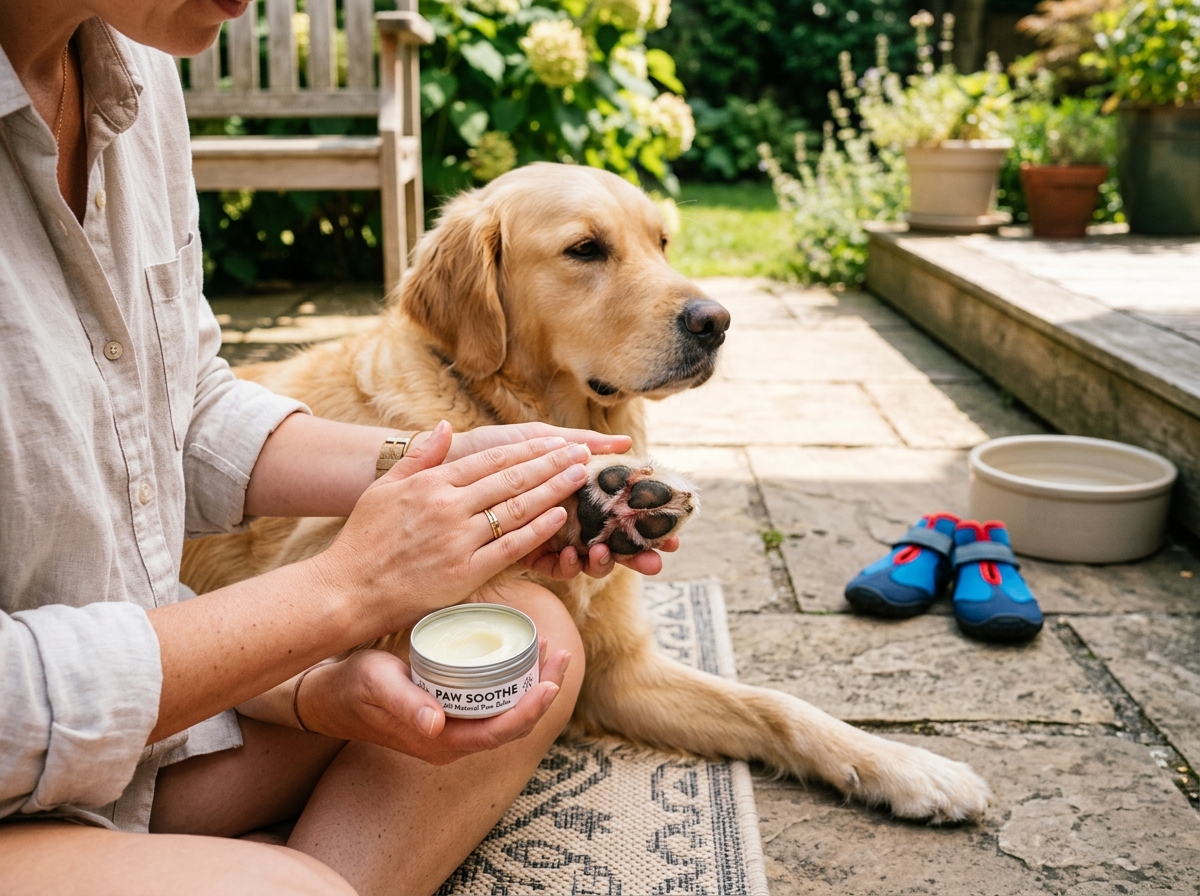
Dog boots provide a barrier between hot surfaces and sensitive paw pads. Ensure the boots fit properly and allow your dog to walk comfortably.
Keep Paw Pads Moisturized


Hot weather can dry out paw pads, leading to cracks and discomfort. Use a veterinarian-approved paw balm or moisturizer to keep the pads soft and healthy. Avoid human lotions, as some ingredients may be harmful if your dog licks them.
Apply paw balm:
- After walks
- Before bedtime
- Whenever the paw pads appear dry or rough
Hydration Supports Paw Health
Proper hydration helps maintain healthy skin and paw pads. Always bring fresh water during outdoor activities and ensure your dog has access to clean drinking water throughout the day.
Dogs that are well-hydrated are generally better equipped to cope with hot weather conditions.
What to Do If Your Dog Burns Their Paws
If you suspect your dog has burned their paws:
- Move them to a cool area immediately.
- Rinse the paws with cool (not ice-cold) water.
- Avoid applying ice directly to the injury.
- Prevent excessive licking.
- Contact your veterinarian for further guidance.
Prompt treatment can help prevent infection and speed up recovery.
Conclusion
Summer can be enjoyable for both dogs and their owners, but protecting your dog’s paws should be a priority. By avoiding hot surfaces, walking during cooler times, using protective gear, and maintaining proper paw care, you can help prevent painful injuries and keep your furry friend comfortable all season long. Healthy paws mean more safe adventures and happier walks throughout the summer.