Bringing home a puppy is an exciting experience, but understanding how your furry friend grows and develops is essential for providing the best care. Puppies go through several developmental stages, each marked by unique physical, behavioral, and emotional changes. Knowing what to expect during these stages can help you raise a happy, healthy, and well-adjusted dog.
Newborn Stage (0–2 Weeks)
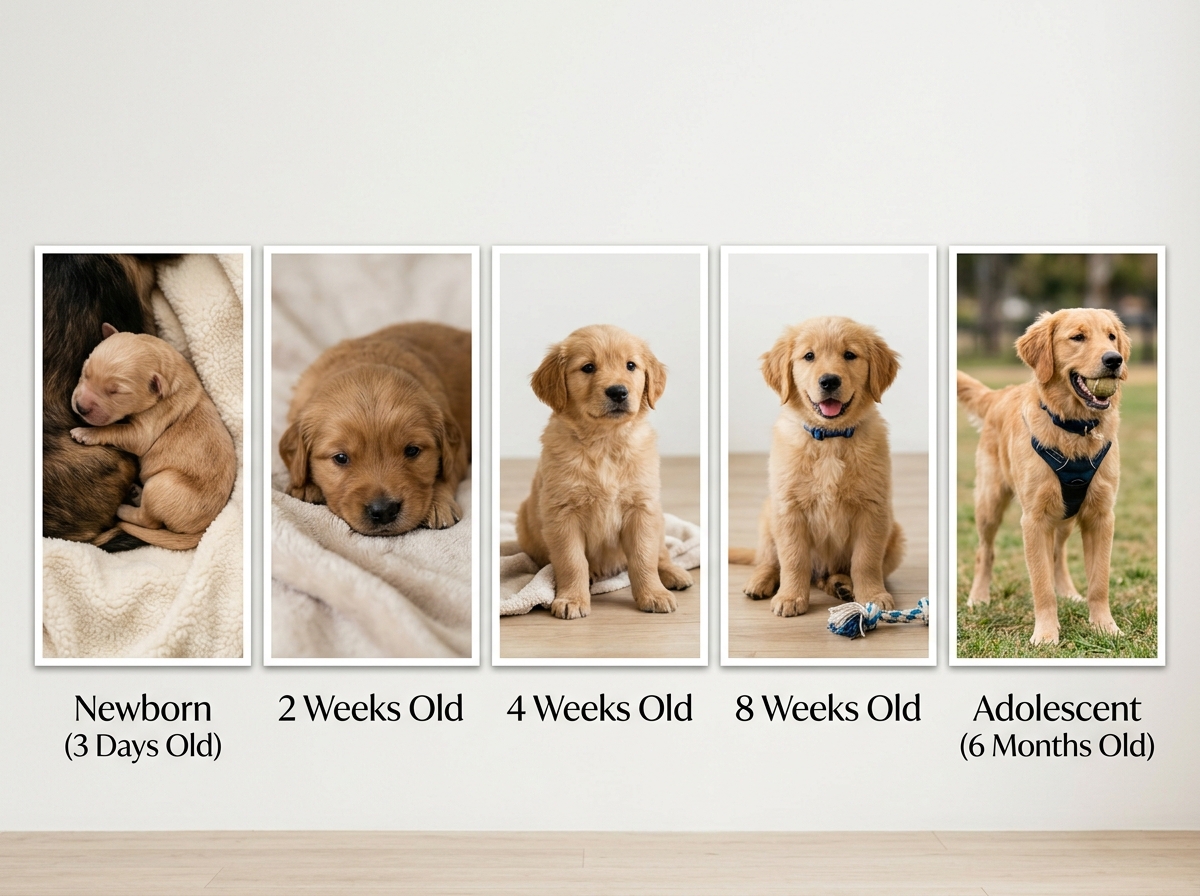
At birth, puppies are completely dependent on their mother. Their eyes and ears remain closed, and they rely on their sense of touch and smell to find warmth and nourishment.
Key Characteristics:
- Sleep for up to 90% of the day
- Depend entirely on their mother for food and care
- Limited movement, mostly crawling
- Eyes begin opening around 10–14 days
Care Tips:
- Keep the environment warm and clean
- Minimize handling unless necessary
- Ensure the mother receives proper nutrition

Transitional Stage (2–4 Weeks)
This stage marks the beginning of a puppy’s awareness of the world. Their senses rapidly develop, allowing them to interact more with their surroundings.
Key Characteristics:
- Eyes and ears fully open
- First attempts at walking
- Baby teeth start emerging
- Increased curiosity and social interaction
Care Tips:
- Introduce gentle human handling
- Provide a safe environment for exploration
- Begin exposing puppies to normal household sounds
Socialization Stage (4–12 Weeks)
The socialization stage is one of the most critical periods in a puppy’s life. Experiences during this time significantly influence future behavior and temperament.
Key Characteristics:
- Rapid learning and development
- Increased interaction with people and littermates
- Development of social skills
- Curiosity about new environments
Why Socialization Matters
Proper socialization helps puppies grow into confident and friendly adult dogs. Positive exposure to people, sounds, objects, and other animals can reduce the risk of fear-based behaviors later in life.
Care Tips:
- Introduce new experiences gradually
- Encourage positive interactions
- Begin basic training and housebreaking
- Schedule vaccinations as recommended by your veterinarian
Juvenile Stage (3–6 Months)
During the juvenile stage, puppies become more independent and energetic. Their personalities start to emerge, and training becomes increasingly important.
Key Characteristics:
- Increased confidence and playfulness
- Teething begins
- Improved coordination
- Growing attention span
Care Tips:
- Provide appropriate chew toys
- Continue obedience training
- Reinforce positive behaviors consistently
- Ensure adequate physical and mental stimulation
Adolescent Stage (6–18 Months)
Often compared to the teenage years in humans, adolescence can be challenging for dog owners. Puppies may test boundaries and display inconsistent behavior.
Key Characteristics:
- Hormonal changes
- Increased independence
- Possible stubbornness during training
- High energy levels
Common Challenges:
- Ignoring previously learned commands
- Excessive chewing or digging
- Increased excitement around other dogs and people
Care Tips:
- Remain patient and consistent
- Continue socialization opportunities
- Increase exercise and enrichment activities
- Reinforce training with positive rewards
Young Adult Stage (18–24 Months)
By this stage, most dogs have reached physical maturity, although some larger breeds may continue developing for several more months.
Key Characteristics:
- More stable behavior
- Improved impulse control
- Fully developed body size
- Strong bond with family members
Care Tips:
- Maintain regular exercise routines
- Continue advanced training
- Schedule routine veterinary checkups
- Provide a balanced, age-appropriate diet
Factors That Influence Puppy Development
Every puppy develops at a slightly different pace. Several factors can influence growth and behavior, including:
- Breed and genetics
- Nutrition
- Health status
- Socialization experiences
- Training consistency
- Living environment
Large breeds often mature more slowly than smaller breeds, both physically and mentally.
Signs of Healthy Puppy Development
A healthy puppy typically shows:
- Steady weight gain
- Bright, alert behavior
- Interest in play and exploration
- Healthy appetite
- Positive social interactions
- Age-appropriate learning progress
If you notice significant developmental delays, lethargy, or behavioral concerns, consult your veterinarian.
Final Thoughts
Understanding puppy development stages allows you to provide the right care, training, and support at every phase of your dog’s life. From the vulnerable newborn period to the energetic adolescent months, each stage plays a crucial role in shaping your puppy’s future behavior and health. By offering proper nutrition, socialization, training, and veterinary care, you’ll help your puppy grow into a confident, well-behaved, and loving companion.