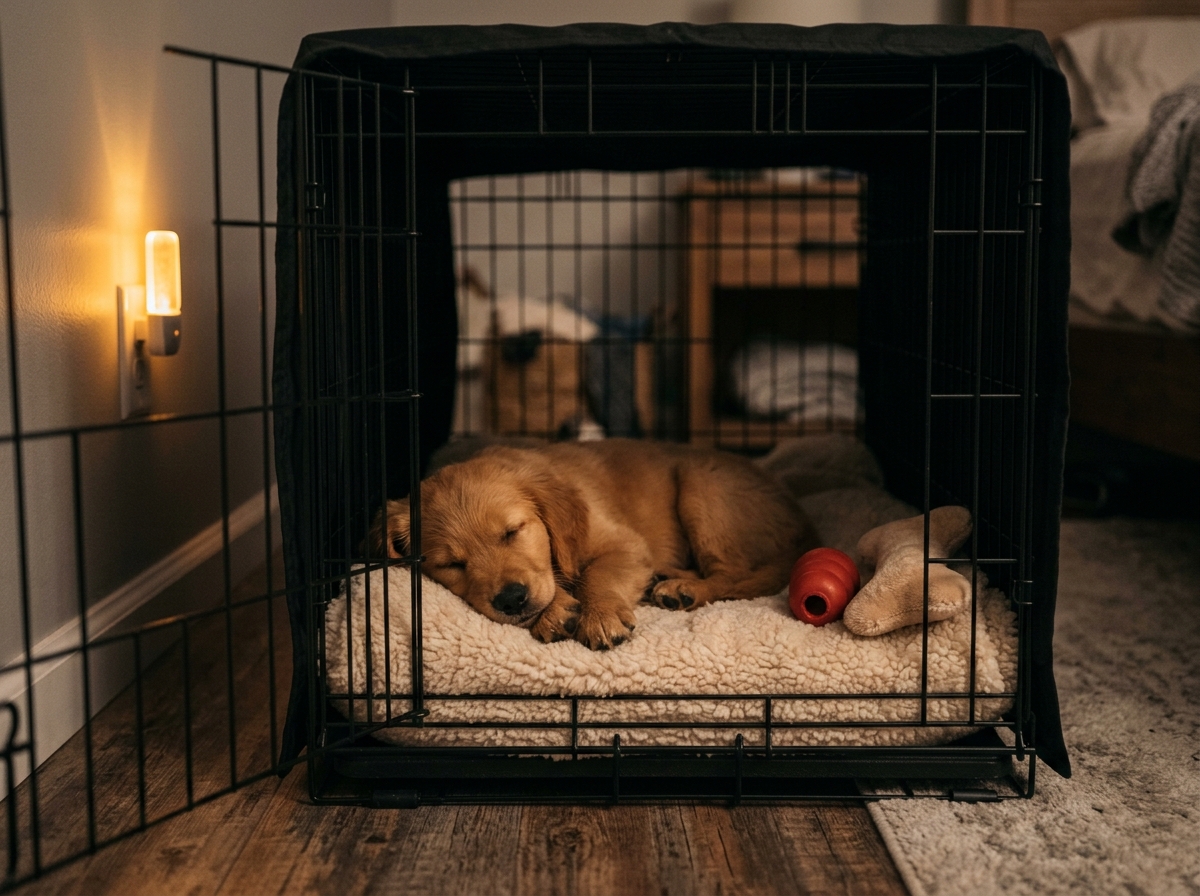
Bringing home a new puppy is exciting, but many owners quickly face a common challenge: a puppy crying at night. Whether your puppy is whining, barking, or howling after bedtime, it’s important to understand that this behavior is completely normal. Puppies are adjusting to a new environment, away from their mother and littermates for the first time.
The good news is that with patience and the right approach, you can help your puppy feel safe and sleep peacefully through the night.
Why Do Puppies Cry at Night?
A puppy may cry during the night for several reasons:
- Feeling lonely or scared
- Missing their mother and siblings
- Needing a bathroom break
- Hunger or thirst
- Discomfort due to temperature
- Lack of exercise before bedtime
- Anxiety about a new environment
Understanding the cause is the first step toward finding the right solution.
Create a Comfortable Sleeping Area


Your puppy’s sleeping environment plays a major role in how well they settle at night.
Tips for a Comfortable Setup
- Use a soft, supportive bed.
- Place the crate or bed in a quiet area.
- Add a blanket for warmth and comfort.
- Keep the room temperature comfortable.
- Consider a heartbeat toy that mimics the presence of littermates.
Many puppies feel more secure when their crate is placed near their owner’s bed during the first few weeks.
Establish a Consistent Bedtime Routine
Dogs thrive on routine. Creating a predictable schedule helps your puppy understand when it’s time to sleep.
A good bedtime routine may include:
- Evening walk or play session.
- Final meal several hours before bed.
- Bathroom break right before sleeping.
- Quiet time to help them relax.
- Bedtime at the same hour every night.
Consistency helps reduce anxiety and speeds up adjustment.
Make Sure Your Puppy Gets Enough Exercise


A puppy with excess energy is more likely to cry, bark, or stay awake at night.
Daily Activities That Help
- Short walks appropriate for age
- Interactive toys
- Basic training sessions
- Fetch and playtime
- Mental stimulation games
Avoid intense play immediately before bedtime, as it may make your puppy more excited rather than relaxed.
Take Your Puppy Outside Before Bed
Young puppies have small bladders and often need bathroom breaks during the night.
Before bedtime:
- Take your puppy outside one last time.
- Give them enough time to relieve themselves.
- Praise them for going potty outdoors.
For very young puppies, you may need to schedule one nighttime bathroom trip until they develop better bladder control.
Avoid Rewarding Nighttime Crying
One of the biggest mistakes new owners make is rushing to comfort their puppy every time they cry.
While it’s important to ensure their needs are met, constantly responding can teach them that crying gets attention.
Instead:
- Wait a few moments before responding.
- Check for genuine needs like bathroom breaks.
- Keep interactions calm and quiet.
- Avoid playtime during nighttime wake-ups.
This helps your puppy learn that nighttime is for sleeping.
Use Positive Crate Training
If your puppy sleeps in a crate, make sure they view it as a safe and happy place.
Crate Training Tips
- Introduce the crate gradually.
- Feed meals near or inside the crate.
- Use treats and praise.
- Never use the crate as punishment.
- Leave the door open during daytime exploration.
A properly crate-trained puppy often settles more quickly at night.
Try Calming Sounds
Some puppies respond well to gentle background noise.
Helpful options include:
- White noise machines
- Soft classical music
- Calming dog playlists
- Low-volume fans
These sounds can mask unfamiliar noises and create a soothing environment.
Be Patient During the Adjustment Period
Most puppies need time to adapt to their new home. Nighttime crying is usually temporary and often improves significantly within a few days or weeks.
Stay consistent with your routine, provide comfort without encouraging dependence, and celebrate small improvements.
When Should You Be Concerned?
While some crying is normal, consult your veterinarian if your puppy:
- Cries excessively every night for several weeks
- Shows signs of illness
- Refuses food or water
- Appears lethargic
- Experiences diarrhea or vomiting
Persistent crying may indicate an underlying medical or behavioral issue that requires professional attention.
Final Thoughts
Learning how to stop puppy crying at night takes patience, consistency, and understanding. By creating a comfortable sleeping area, establishing a bedtime routine, ensuring adequate exercise, and avoiding reinforcement of unwanted behaviors, most puppies quickly learn to sleep peacefully through the night.
Remember that your puppy is adjusting to a huge life change. With time and reassurance, those sleepless nights will soon become a thing of the past.