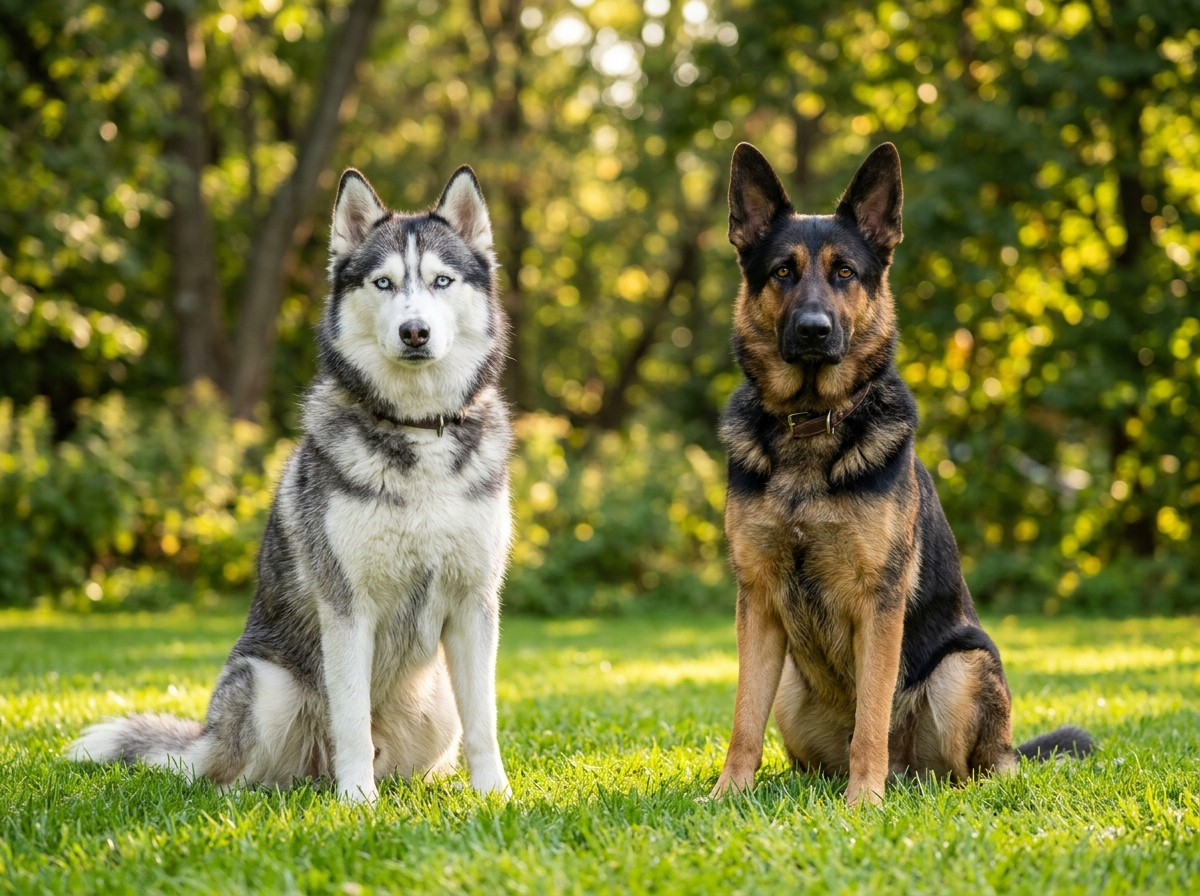
Choosing between a Siberian Husky and a German Shepherd can be challenging. Both breeds are intelligent, loyal, and beautiful, but they have very different personalities, exercise needs, and training requirements. Understanding these differences can help you decide which dog is the best fit for your lifestyle.
Overview of the Siberian Husky
The Siberian Husky is a medium-sized working dog originally bred to pull sleds across long distances in harsh Arctic conditions. Huskies are known for their striking blue eyes, wolf-like appearance, and energetic nature.
Key Traits of a Husky
- Friendly and social
- High energy levels
- Independent personality
- Strong prey drive
- Excellent endurance
- Moderate size (35–60 pounds)
Appearance Comparison


When comparing appearance, both breeds are stunning but easily distinguishable.
Husky Appearance
- Thick double coat
- Blue, brown, or mixed-color eyes
- Curled bushy tail
- Compact athletic build
- Wolf-like facial features
German Shepherd Appearance
- Strong muscular body
- Erect ears
- Black and tan coat is most common
- Longer muzzle
- Powerful and confident stance
Temperament and Personality
One of the biggest differences between Huskies and German Shepherds is temperament.
Husky Temperament
Huskies are friendly and outgoing. They generally get along well with strangers, children, and other dogs. However, they are known for being stubborn and independent, making training more challenging.
German Shepherd Temperament
German Shepherds are loyal, protective, and highly devoted to their families. They are naturally cautious around strangers and often excel as guard dogs, police dogs, and service animals.
Intelligence and Trainability
German Shepherds are widely considered one of the smartest dog breeds in the world. They learn commands quickly and enjoy having a job to do.
Huskies are intelligent as well, but their independent mindset means they may choose not to obey commands if they don’t see a reason to.
Training Winner
German Shepherd
Their eagerness to please and strong work ethic make training significantly easier.
Exercise Requirements


Both breeds require substantial exercise, but Huskies typically need even more physical activity.
Husky Exercise Needs
- 1–2 hours daily
- Running and hiking
- Mental stimulation
- Secure fenced yard
German Shepherd Exercise Needs
- 1–2 hours daily
- Obedience training
- Agility sports
- Interactive games
Without enough exercise, either breed can develop destructive behaviors.
Grooming and Shedding
Both dogs have double coats and shed heavily.
Husky Grooming
- Heavy seasonal shedding
- Weekly brushing
- Minimal bathing needs
- Naturally clean coat
German Shepherd Grooming
- Year-round shedding
- Frequent brushing
- Regular coat maintenance
- More noticeable hair around the home
Neither breed is ideal for owners seeking a low-maintenance dog.
Family Compatibility
Husky for Families
Huskies are generally playful and affectionate with children. They thrive in active households where they receive plenty of attention and exercise.
German Shepherd for Families
German Shepherds form strong bonds with family members and often become protective guardians. Early socialization is important to ensure balanced behavior.
Health and Lifespan
Husky Health
Common issues include:
- Hip dysplasia
- Eye disorders
- Cataracts
- Progressive retinal atrophy
Average lifespan: 12–15 years
German Shepherd Health
Common issues include:
- Hip dysplasia
- Elbow dysplasia
- Degenerative myelopathy
- Bloat
Average lifespan: 9–13 years
Pros and Cons
Husky Pros
- Friendly personality
- Beautiful appearance
- Excellent endurance
- Good with other dogs
Husky Cons
- Difficult to train
- Heavy shedding
- Escape artist tendencies
- Strong prey drive
German Shepherd Pros
- Highly trainable
- Protective nature
- Extremely intelligent
- Versatile working dog
German Shepherd Cons
- Heavy shedding
- Requires consistent training
- Can become overprotective
- Higher risk of joint issues
Final Verdict: Husky vs German Shepherd
If you’re looking for a friendly, adventurous companion that loves outdoor activities, the Siberian Husky may be the perfect choice. However, if you want a loyal, protective, and highly trainable dog that excels in obedience and family protection, the German Shepherd is usually the better option.
Ultimately, the best breed depends on your experience level, activity level, and what you want from a canine companion. Both Huskies and German Shepherds can make incredible pets when given proper training, exercise, and care.
Quick Comparison Table
| Feature | Husky | German Shepherd |
|---|---|---|
| Intelligence | High | Very High |
| Trainability | Moderate | Excellent |
| Guard Dog Ability | Low | Excellent |
| Friendliness | Very High | High |
| Energy Level | Very High | High |
| Shedding | Heavy | Heavy |
| Family Friendly | Yes | Yes |
| Lifespan | 12–15 Years | 9–13 Years |
Winner for Families Seeking Protection: German Shepherd
Winner for Active Outdoor Enthusiasts: Husky
Winner for Trainability: German Shepherd
Winner for Friendliness: Husky