Easter is a joyful time filled with family gatherings, colorful decorations, delicious treats, and exciting celebrations. While humans enjoy the festivities, Easter can present several hidden dangers for our canine companions. From chocolate eggs to decorative plants, many common Easter items can pose serious health risks to dogs.
This guide will help you keep your furry friend safe and happy throughout the Easter season.
Why Easter Can Be Dangerous For Dogs
Easter celebrations often introduce unfamiliar foods, decorations, and activities into your home. Curious dogs love to explore their surroundings and may accidentally consume something harmful.
Being aware of potential hazards is the first step toward preventing emergencies and ensuring your dog enjoys a safe holiday.
Chocolate And Candy: The Biggest Easter Threat
Chocolate is one of the most common Easter dangers for dogs. It contains substances called theobromine and caffeine, which dogs cannot process effectively. Even small amounts can cause serious health problems.
Symptoms Of Chocolate Poisoning
- Vomiting
- Diarrhea
- Increased heart rate
- Restlessness
- Tremors
- Seizures
Sugar-free candies can be equally dangerous because many contain xylitol, an artificial sweetener that can cause a rapid drop in blood sugar and liver failure in dogs.
Safety Tip: Keep all Easter candy, chocolate eggs, and gift baskets well out of your dog’s reach.
Beware Of Easter Lilies And Spring Plants
Many spring flowers are used as Easter decorations. While lilies are particularly toxic to cats, several Easter plants can still cause digestive upset or other issues in dogs.
Potentially harmful plants include:
- Easter lilies
- Tulips
- Daffodils
- Hyacinths
- Azaleas
If your dog chews on decorative plants, contact your veterinarian immediately.
Keep Easter Basket Fillers Away From Dogs
Easter baskets often contain decorative grass made from plastic or paper. While it may seem harmless, dogs can swallow these materials, leading to intestinal blockages that may require surgery.
Other basket fillers such as ribbons, plastic wrappers, and small toys can also become choking hazards.
Safer Alternatives
- Natural paper fillers
- Dog-friendly treats
- Durable pet toys
- Pet-safe chew items
Always supervise your dog around Easter decorations.
Holiday Meals And Table Scraps Can Cause Problems
Many Easter meals include foods that are unhealthy or toxic for dogs. Rich, fatty foods can upset your dog’s stomach and may even trigger pancreatitis.
Foods to avoid sharing include:
- Ham with seasonings
- Fatty meats
- Onions
- Garlic
- Grapes
- Raisins
- Desserts
- Alcoholic beverages
Instead, offer your dog veterinarian-approved treats or plain cooked meat without seasoning.
Watch Out For Easter Egg Hunts
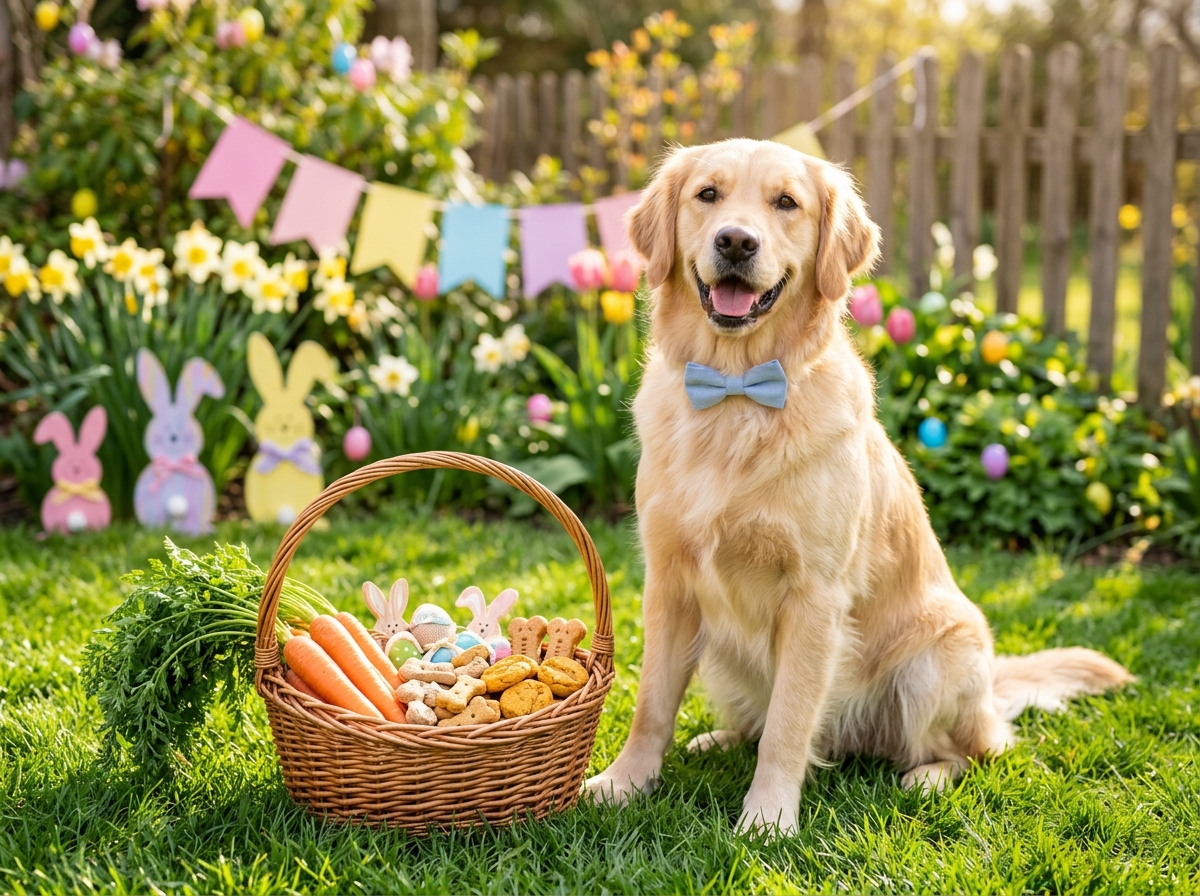
Easter egg hunts are fun for children but can be risky for dogs. Hidden chocolate eggs, candy wrappers, and plastic eggs can easily attract curious pets.
Before allowing your dog into areas where an egg hunt took place:
- Count all eggs before and after the hunt.
- Pick up wrappers immediately.
- Inspect the yard thoroughly.
- Keep dogs supervised around children carrying candy.
A missing chocolate egg could become a veterinary emergency if found by your dog first.
Managing Guests And Holiday Stress
Holiday gatherings often mean extra visitors, noise, and excitement. Some dogs enjoy the attention, while others may feel overwhelmed.
Signs of stress include:
- Excessive barking
- Hiding
- Pacing
- Panting
- Destructive behavior
Create a quiet, comfortable space where your dog can relax away from guests when needed.
Easter Safety Checklist For Dog Owners
Before celebrating Easter, make sure you:
✓ Store chocolate and candy securely.
✓ Keep decorative plants out of reach.
✓ Remove plastic grass and ribbons.
✓ Supervise Easter egg hunts.
✓ Avoid feeding table scraps.
✓ Provide fresh water at all times.
✓ Monitor your dog around guests and children.
✓ Keep your veterinarian’s emergency number handy.
Final Thoughts
Easter should be a fun and memorable holiday for every member of the family—including your dog. By taking a few simple precautions, you can prevent accidents and keep your furry companion safe throughout the celebrations.
Remember that many Easter hazards, including chocolate, candy, decorative plants, and basket fillers, can pose serious risks to dogs. Staying vigilant and planning ahead will help ensure a happy, healthy, and stress-free Easter for both you and your beloved pet.