Bringing a new puppy home is exciting, but it also comes with responsibilities. One of the most effective ways to help your puppy develop good habits is crate training. A crate provides a safe, comfortable space where your puppy can rest, sleep, and learn important boundaries. When done correctly, crate training helps with housebreaking, reduces anxiety, and creates a secure environment for your furry friend.
Why Crate Training Is Important
A crate mimics a den-like environment that dogs naturally seek for comfort and security. Puppies that are crate trained often adapt more quickly to household routines and experience fewer behavioral issues. Additionally, crates can keep puppies safe when they cannot be directly supervised.
Step 1: Choose the Right Crate


Selecting the correct crate is the foundation of successful training. The crate should be large enough for your puppy to stand up, turn around, and lie down comfortably. However, it should not be so large that one side becomes a sleeping area and the other a bathroom.
Common crate types include:
- Wire crates with adjustable dividers
- Plastic travel crates
- Soft-sided crates for temporary use
Place the crate in a quiet area where your family spends time, allowing your puppy to feel included while still having a calm space.
Step 2: Make the Crate Inviting
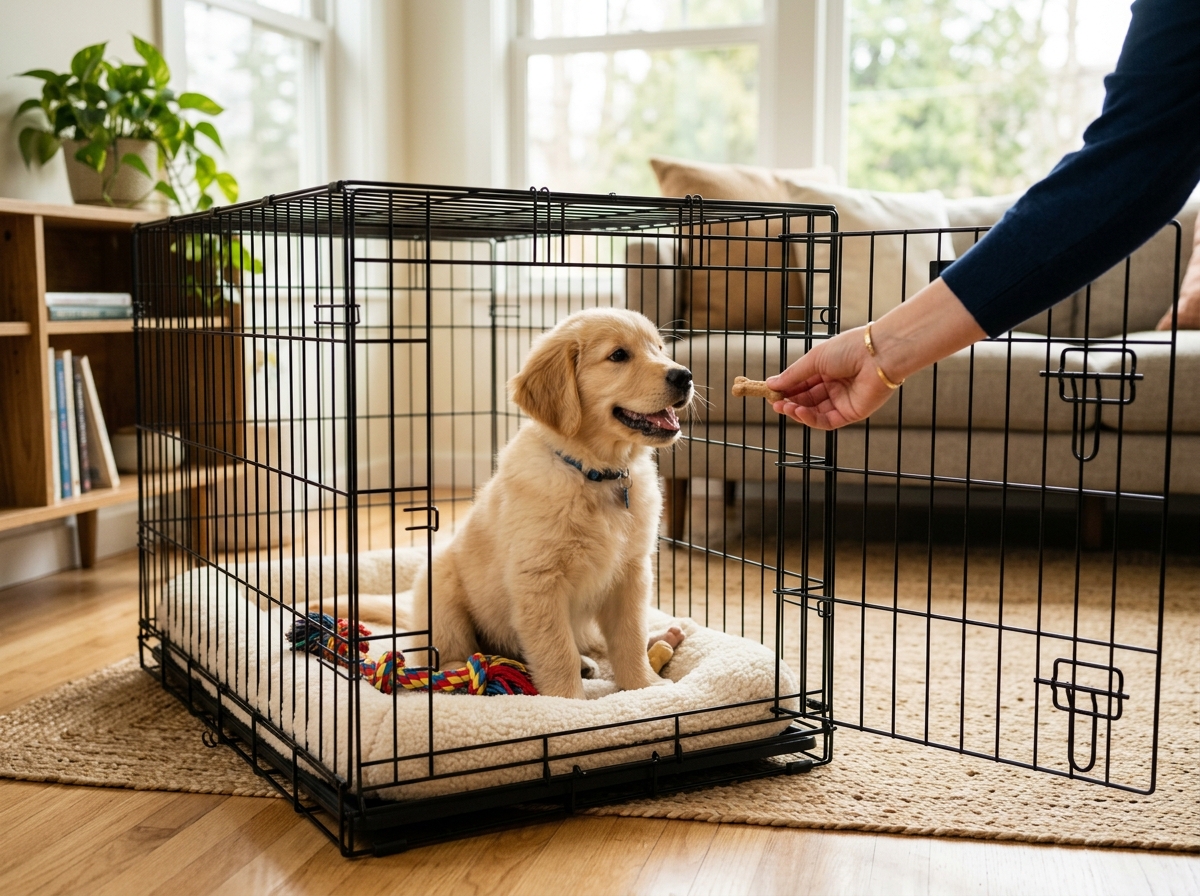
Introduce the crate as a positive place. Add a soft blanket, a comfortable bed, and a few safe toys. Leave the door open and allow your puppy to explore at their own pace.
You can encourage exploration by placing treats near the crate entrance and gradually moving them farther inside. Never force your puppy into the crate.
Step 3: Introduce Meals in the Crate
Feeding your puppy near or inside the crate helps create positive associations. Start by placing the food bowl close to the crate, then gradually move it deeper inside over several meals.
As your puppy becomes comfortable, close the door briefly while they eat and open it again when finished.
Step 4: Practice Short Crate Sessions
Once your puppy willingly enters the crate, begin short training sessions.
- Ask your puppy to enter the crate.
- Reward them with praise and treats.
- Close the door for a few minutes.
- Stay nearby initially.
- Gradually increase the duration.
Keep these sessions positive and end them before your puppy becomes stressed.
Step 5: Extend Crate Time Gradually


As your puppy gains confidence, slowly increase the amount of time spent in the crate. Begin leaving the room for short periods and return calmly.
Avoid making a big fuss when leaving or returning, as this can increase excitement or anxiety.
A general guideline is:
- 8–10 weeks old: 30–60 minutes
- 11–14 weeks old: 1–3 hours
- 15–16 weeks old: 3–4 hours
- Older puppies: Up to 4–6 hours when necessary
Remember that puppies need frequent bathroom breaks and social interaction.
Step 6: Use the Crate for House Training
Dogs naturally avoid soiling their sleeping area. This instinct makes crate training a valuable tool for housebreaking.
Take your puppy outside:
- First thing in the morning
- After meals
- After naps
- After play sessions
- Before bedtime
Reward successful bathroom trips immediately with praise and treats.
Step 7: Establish a Bedtime Routine
Many puppies sleep better in a crate at night. Place the crate near your bed during the first few weeks so your puppy feels secure.
Before bedtime:
- Provide a final bathroom break
- Remove excessive stimulation
- Offer a safe chew toy
- Keep the sleeping environment calm
Consistency helps puppies learn when it is time to settle down and sleep.
Common Crate Training Mistakes to Avoid
To ensure success, avoid these common mistakes:
- Using the crate as punishment
- Leaving a puppy crated for too long
- Moving too quickly through training stages
- Ignoring signs of stress or discomfort
- Failing to provide exercise and mental stimulation
The crate should always be associated with safety, comfort, and positive experiences.
Signs of Successful Crate Training
Your puppy is becoming crate trained when they:
- Enter the crate willingly
- Relax or sleep comfortably inside
- Show minimal whining when crated
- Maintain good house-training habits
- View the crate as a safe retreat
Final Thoughts
Crate training requires patience, consistency, and positive reinforcement. Every puppy learns at a different pace, so avoid rushing the process. By creating positive experiences and gradually increasing crate time, you can help your puppy develop confidence, good behavior, and a lifelong sense of security.
With proper crate training, the crate becomes more than just a training tool—it becomes your puppy’s personal safe haven.