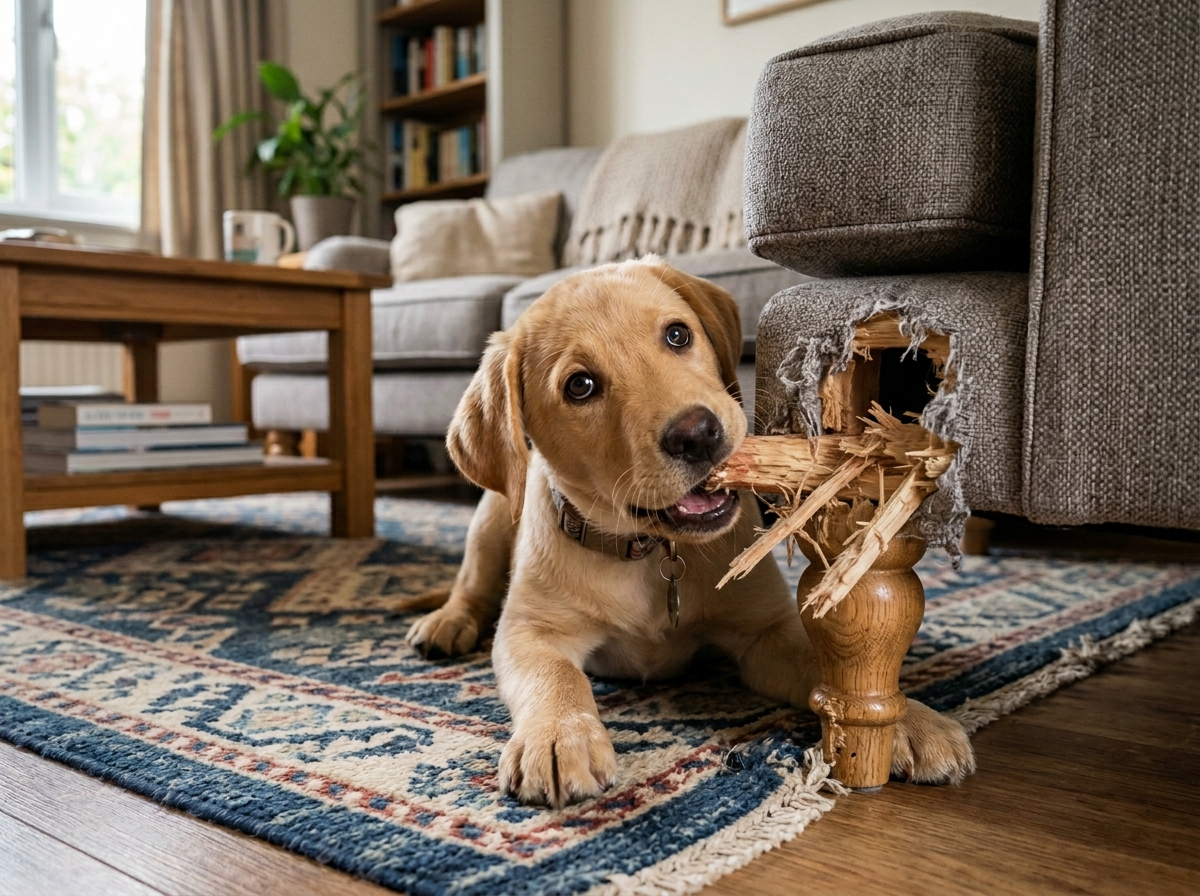
Dogs are loving, loyal companions, but many pet owners face a common challenge: furniture chewing. From table legs and sofa cushions to wooden cabinets, destructive chewing can cause frustration and expensive damage. Understanding why dogs chew furniture is the first step toward solving the problem and creating a happier environment for both you and your pet.
Why Do Dogs Chew Furniture?


Chewing is a natural behavior for dogs. However, when it targets household furniture, there is usually an underlying reason.
1. Teething in Puppies
Just like human babies, puppies experience discomfort when their adult teeth begin to emerge. Chewing helps relieve gum pain and provides comfort during the teething process.
2. Boredom and Lack of Exercise
Dogs need both physical and mental stimulation. If they don’t get enough walks, playtime, or interactive activities, they may turn to furniture as a way to entertain themselves.
3. Separation Anxiety
Some dogs chew furniture when left alone. This behavior can be a sign of stress or anxiety caused by being separated from their owners.
4. Curiosity and Exploration
Dogs explore the world through their mouths. New furniture, unusual smells, or unfamiliar textures may attract their attention and encourage chewing.
5. Excess Energy
High-energy breeds often need more exercise than other dogs. Without an outlet for their energy, they may engage in destructive behaviors, including furniture chewing.
Signs That Furniture Chewing Is Becoming a Problem
Occasional chewing is normal, especially in puppies. However, you should take action if:
- Furniture damage becomes frequent.
- Your dog chews despite having toys available.
- The behavior occurs mainly when left alone.
- Your dog swallows pieces of wood, fabric, or foam.
- The chewing is accompanied by other signs of anxiety.
How to Stop Your Dog From Chewing Furniture


1. Provide Appropriate Chew Toys
Offer a variety of safe chew toys designed for your dog’s age and chewing strength. Rotate toys regularly to keep them interesting.
2. Increase Daily Exercise
A tired dog is less likely to engage in destructive behavior. Daily walks, fetch sessions, and active play can help burn excess energy.
3. Use Positive Reinforcement
Reward your dog whenever they choose a chew toy instead of furniture. Praise, treats, and affection help reinforce good habits.
4. Dog-Proof Your Home
Limit access to furniture when you cannot supervise your dog. Use baby gates, exercise pens, or crate training when appropriate.
5. Provide Mental Stimulation
Puzzle feeders, training games, and scent-based activities keep dogs mentally engaged and reduce boredom.
6. Address Separation Anxiety
If chewing occurs mainly when you’re away, consider:
- Gradual departure training
- Interactive toys
- Background music or white noise
- Consulting a professional dog trainer or veterinarian
7. Use Taste Deterrent Sprays
Pet-safe bitter sprays can make furniture less appealing. Always test the product on a small area first to avoid damaging surfaces.
Common Mistakes to Avoid
- Punishing your dog after the damage is done.
- Leaving puppies unsupervised for long periods.
- Expecting exercise alone to solve the problem.
- Providing unsafe household items as chew alternatives.
- Ignoring signs of stress or anxiety.
When to Seek Professional Help
If your dog continues to destroy furniture despite training efforts, consult a veterinarian or certified dog behavior specialist. Persistent chewing may be linked to anxiety disorders, medical issues, or behavioral challenges that require professional guidance.
Final Thoughts
Furniture chewing is usually a symptom of an unmet need rather than bad behavior. Whether your dog is teething, bored, anxious, or simply full of energy, identifying the root cause can help you choose the right solution. With patience, consistent training, plenty of exercise, and appropriate chew toys, most dogs can learn to leave your furniture alone and develop healthier chewing habits.