Leash training is one of the most important skills every dog owner should teach their pet. A well-trained dog that walks calmly on a leash is safer, easier to manage, and more enjoyable to take on outings. Whether you have a playful puppy or an older dog learning new habits, patience and consistency are the keys to success. This guide covers practical leash training tips for beginners to help create positive walking experiences for both you and your furry companion.
Why Leash Training Matters
Leash training is about more than simply preventing your dog from running away. It helps establish communication, encourages good behavior, and ensures safety in public spaces. Dogs that understand leash manners are less likely to pull, lunge, or become distracted during walks.


Choose the Right Equipment
Before starting leash training, make sure you have the proper equipment:
- A comfortable collar or harness that fits correctly
- A standard leash between 4 and 6 feet long
- Small training treats for rewards
- A calm environment with minimal distractions
Avoid retractable leashes during the training phase, as they can encourage pulling and make it harder to teach proper walking behavior.
Start Indoors First
For many dogs, especially puppies, the leash can feel strange at first. Begin training indoors where there are fewer distractions.
- Attach the leash and allow your dog to get used to it.
- Let them walk around while supervised.
- Reward calm behavior with praise and treats.
- Practice walking short distances inside your home.
Once your dog feels comfortable, gradually move to a quiet outdoor area.
Use Positive Reinforcement
Positive reinforcement is one of the most effective training methods. Whenever your dog walks beside you without pulling, immediately reward them with:
- Verbal praise
- Gentle petting
- A small treat
This helps your dog associate good leash behavior with positive outcomes.
Teach Your Dog to Stop Pulling
Pulling is one of the most common leash-training challenges. When your dog pulls:
- Stop walking immediately.
- Wait until the leash becomes loose.
- Encourage your dog to return to your side.
- Resume walking only when they are calm.
Consistency is essential. If you continue walking while your dog pulls, they learn that pulling gets them where they want to go.
Practice in Different Environments
As your dog improves, introduce new locations with varying levels of distraction.


Start with:
- Quiet streets
- Local parks
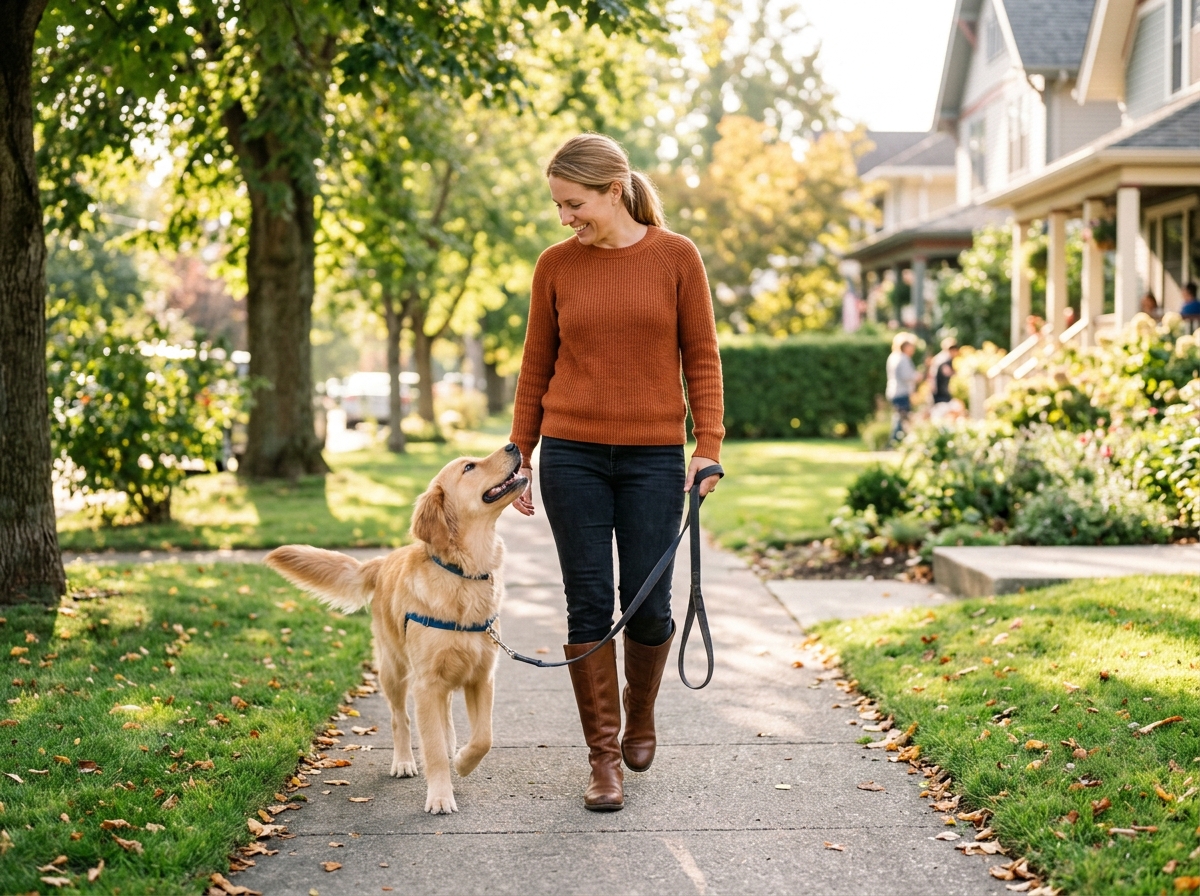
- Neighborhood sidewalks
Gradually expose your dog to busier environments while maintaining the same training techniques.
Keep Training Sessions Short
Dogs learn best through short, focused sessions. Aim for:
- 5–10 minutes for young puppies
- 10–15 minutes for older dogs
- Multiple short sessions throughout the day
Ending on a positive note helps keep your dog motivated for future training.
Be Patient and Consistent
Every dog learns at a different pace. Some may understand leash manners within a few days, while others may need several weeks of practice. Stay calm, reward progress, and avoid punishment-based methods that can create fear or anxiety.
Common Mistakes to Avoid
Many beginners unknowingly slow their dog’s progress by:
- Using inconsistent commands
- Allowing pulling sometimes but not others
- Training in overly distracting environments too soon
- Skipping rewards for good behavior
- Expecting immediate results
Recognizing these mistakes can help make training more effective.
Conclusion
Leash training is a valuable skill that improves safety, communication, and overall enjoyment during walks. By choosing the right equipment, using positive reinforcement, and remaining patient throughout the process, beginners can successfully teach their dogs to walk calmly on a leash. With regular practice and consistency, leash training can become a rewarding experience that strengthens the bond between you and your pet.
The article includes two images placed under separate headings, making it more engaging and visually appealing.