Ear mites are one of the most common parasites that affect dogs. These tiny creatures live inside the ear canal and feed on skin debris and ear wax. Although ear mites are more frequently found in cats, dogs can also become infected, especially if they have close contact with other pets. If left untreated, ear mites can cause severe irritation, ear infections, and even hearing problems.
What Are Ear Mites in Dogs?
Ear mites are microscopic parasites that live on the surface of the skin within a dog’s ear canal. The most common species is Otodectes cynotis. These parasites are highly contagious and can spread quickly between dogs, cats, and other animals through direct contact.
Ear mites reproduce rapidly, making early detection and treatment essential for your dog’s health and comfort.
Image 1: Dog Scratching Ear Due to Ear Mites

Symptoms of Ear Mites in Dogs
Recognizing the signs of ear mites can help prevent complications. Common symptoms include:
- Excessive scratching of the ears
- Frequent head shaking
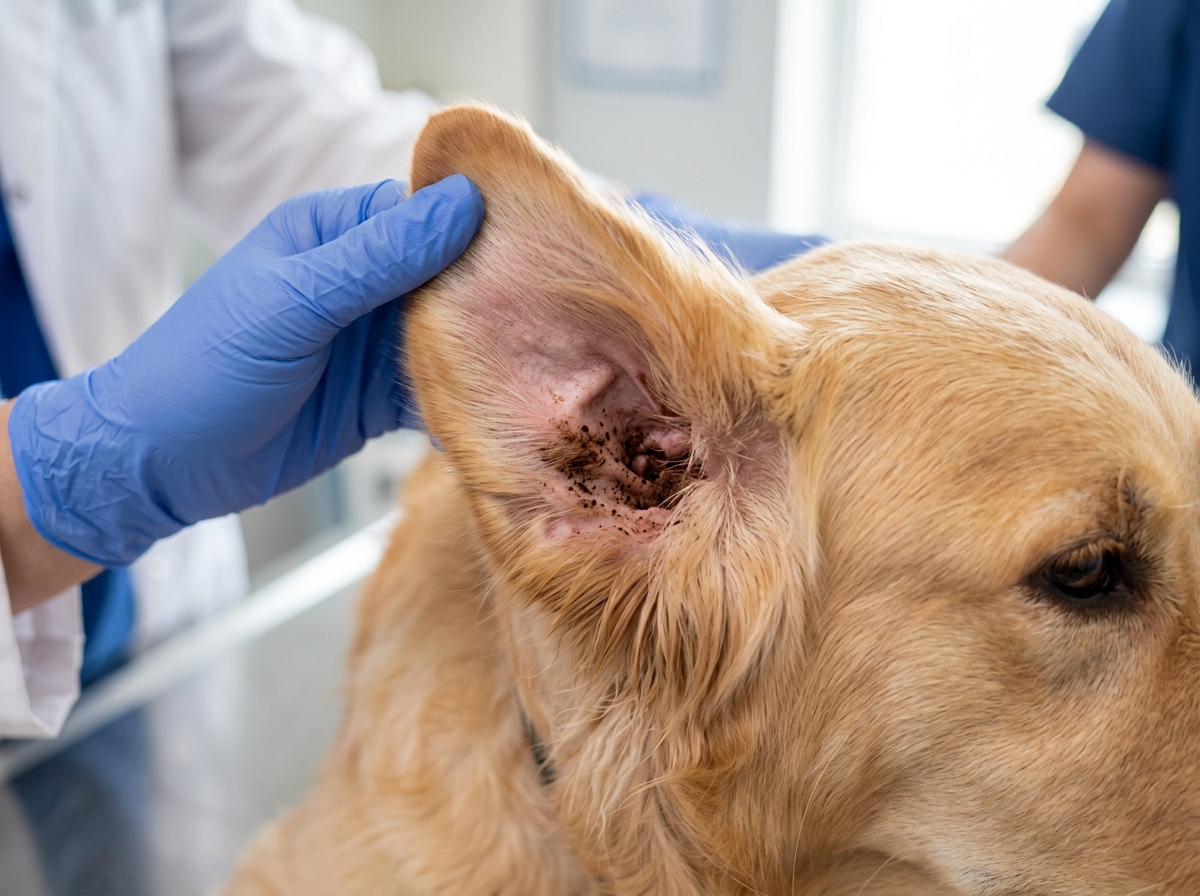
- Dark brown or black ear discharge resembling coffee grounds
- Redness and inflammation inside the ear
- Unpleasant odor from the ears
- Scabs or scratches around the ears and neck
- Sensitivity when the ears are touched
Some dogs may become restless or irritable due to the constant itching and discomfort.
What Causes Ear Mites in Dogs?
Ear mites spread through direct contact with infected animals. Dogs that visit kennels, dog parks, grooming facilities, or multi-pet households are at greater risk.
Common sources of infection include:
- Contact with infected dogs or cats
- Exposure to stray animals
- Sharing bedding or grooming tools
- Living in crowded environments
Because ear mites are highly contagious, all pets in the household may need treatment if one animal becomes infected.
How Veterinarians Diagnose Ear Mites
A veterinarian can diagnose ear mites through a physical examination and by examining ear debris under a microscope. In some cases, an otoscope may be used to inspect the ear canal and identify mites directly.
Accurate diagnosis is important because symptoms of ear mites can resemble bacterial infections, yeast infections, or allergies.
Image 2: Veterinarian Examining a Dog’s Ear

Treatment for Ear Mites in Dogs
Fortunately, ear mites are treatable. Your veterinarian may recommend:
Ear Cleaning
The first step usually involves cleaning the ears to remove debris, wax, and mites. This allows medications to work more effectively.
Medicated Ear Drops
Prescription ear drops are commonly used to kill mites and reduce inflammation.
Topical or Oral Medications
Modern parasite-control products may include topical or oral medications that eliminate ear mites and prevent reinfestation.
Treating Secondary Infections
If the dog has developed a bacterial or yeast infection due to excessive scratching, additional medications may be prescribed.
Always follow your veterinarian’s instructions and complete the full treatment course.
Can Ear Mites Be Prevented?
While no prevention method is 100% effective, you can reduce your dog’s risk by:
- Regularly checking your dog’s ears
- Keeping ears clean and dry
- Using veterinarian-approved parasite preventatives
- Avoiding contact with infected animals
- Washing pet bedding frequently
- Scheduling routine veterinary checkups
Early detection is the best defense against severe infestations.
Are Ear Mites Dangerous?
Ear mites are generally not life-threatening, but they can cause significant discomfort. Untreated infestations may lead to:
- Chronic ear infections
- Damage to the ear canal
- Hearing impairment
- Skin infections from excessive scratching
Prompt treatment helps prevent these complications and keeps your dog comfortable.
When to See a Veterinarian
Contact your veterinarian if your dog:
- Constantly scratches its ears
- Has dark ear discharge
- Shows signs of pain or discomfort
- Develops a foul odor from the ears
- Experiences balance problems or hearing changes
Professional diagnosis ensures your dog receives the correct treatment.
Conclusion
Ear mites in dogs are a common but manageable problem. These tiny parasites can cause intense itching, inflammation, and secondary infections if left untreated. By recognizing the symptoms early, seeking veterinary care, and maintaining good ear hygiene, you can protect your dog from discomfort and long-term complications. Regular ear checks and preventive care remain the best ways to keep your furry companion healthy and happy.