Food allergies are one of the most common health issues affecting dogs today. If your dog constantly scratches, suffers from ear infections, experiences digestive upset, or develops skin irritation, food allergies may be the culprit. Choosing the right diet can significantly improve your dog’s quality of life and help manage allergic reactions effectively.
In this guide, we’ll explore the best food options for allergic dogs, ingredients to avoid, and tips for selecting the perfect diet for your furry companion.
Understanding Food Allergies in Dogs
Food allergies occur when a dog’s immune system mistakenly identifies a specific ingredient as harmful. Common symptoms include:
- Excessive itching and scratching
- Red, inflamed skin
- Chronic ear infections
- Hair loss
- Vomiting or diarrhea
- Frequent licking of paws
The most common food allergens for dogs include beef, chicken, dairy, wheat, soy, and eggs.
Best Ingredients for Allergic Dogs
When choosing food for an allergic dog, look for limited-ingredient diets that contain novel protein sources and easily digestible carbohydrates.
Novel Protein Sources
Novel proteins are meats your dog has likely never eaten before, reducing the risk of triggering allergies.
Popular options include:
- Duck
- Venison
- Rabbit
- Kangaroo
- Salmon
- Lamb
Healthy Carbohydrates
Dogs with food sensitivities often benefit from simple carbohydrate sources such as:
- Sweet potatoes
- Brown rice
- Oats
- Peas
- Pumpkin
These ingredients provide energy while being gentle on the digestive system.
Top Foods for Allergic Dogs
1. Salmon and Sweet Potato Formula
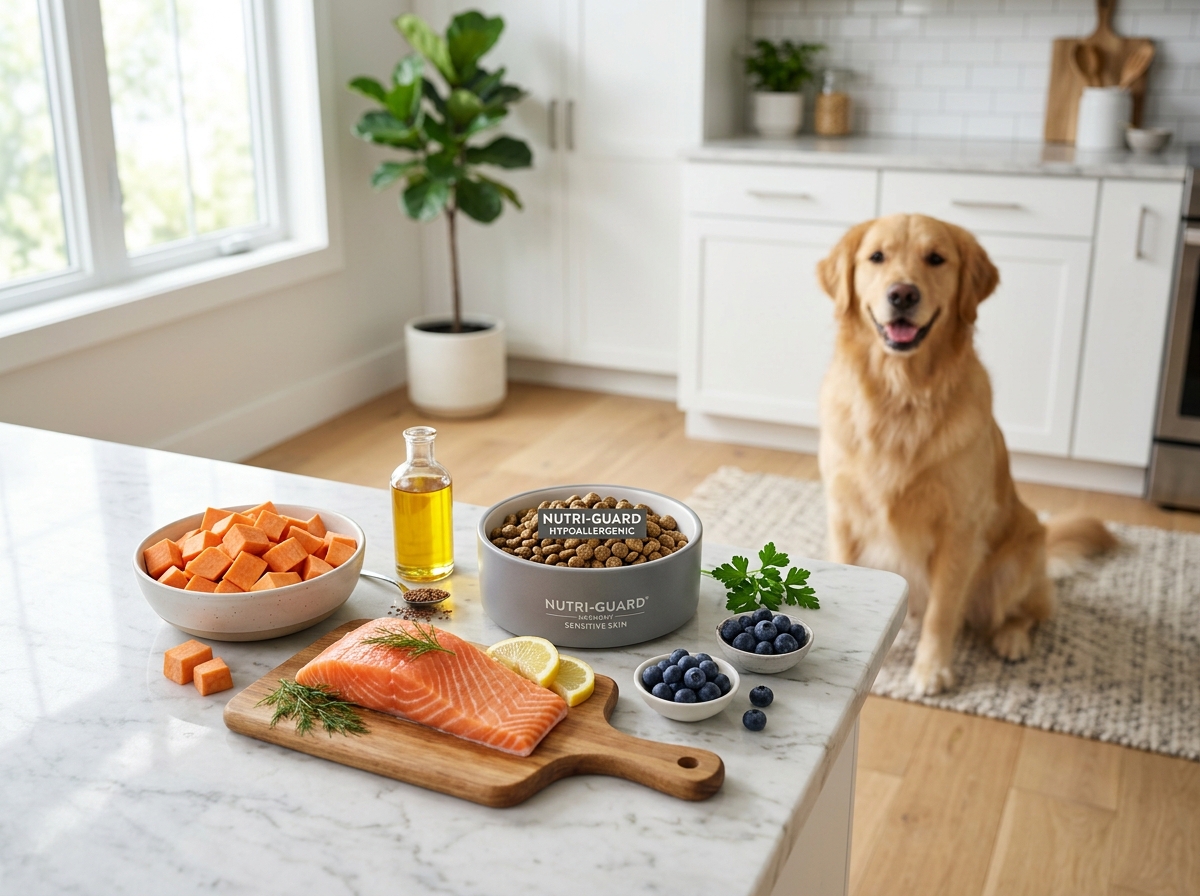
Salmon is rich in omega-3 fatty acids, which help reduce inflammation and support healthy skin. Sweet potatoes provide fiber and essential vitamins without common allergens.
2. Limited Ingredient Dog Food
Limited ingredient diets contain fewer components, making it easier to identify and avoid allergy triggers. These formulas typically feature a single protein source and one carbohydrate source.
3. Hydrolyzed Protein Diets
Hydrolyzed protein foods break proteins into tiny particles that the immune system cannot easily recognize, reducing allergic reactions. Veterinarians often recommend these diets for severe allergies.
4. Grain-Free Options
Some allergic dogs benefit from grain-free diets, especially if they are sensitive to wheat or corn. However, grain-free foods are not necessary for every dog, so consult your veterinarian first.
Foods to Avoid
To reduce allergy symptoms, avoid foods containing:
- Beef
- Chicken (if identified as an allergen)
- Dairy products
- Wheat
- Soy
- Artificial colors
- Artificial preservatives
- Excessive fillers
Always read ingredient labels carefully before purchasing dog food.
Homemade Food for Allergic Dogs
Some pet owners choose homemade diets to control ingredients completely. A simple allergy-friendly meal may include:
- Cooked salmon or turkey
- Sweet potatoes
- Pumpkin
- Green beans
- Fish oil supplement
Before switching to homemade meals, consult a veterinarian or canine nutritionist to ensure your dog receives balanced nutrition.
Tips for Transitioning to a New Diet
Changing your dog’s food too quickly can cause digestive issues. Follow these steps:
- Mix 25% new food with 75% old food for 2–3 days.
- Increase to 50% new food for the next few days.
- Move to 75% new food.
- Transition fully after 7–10 days.
Monitor your dog for any signs of improvement or worsening symptoms during the transition.
When to See a Veterinarian
If your dog’s allergy symptoms persist despite dietary changes, seek veterinary advice. Your veterinarian may recommend allergy testing, elimination diets, or prescription hypoallergenic food.
Final Thoughts
Finding the best food for allergic dogs often requires patience and careful observation. Limited-ingredient diets, novel proteins, and hydrolyzed protein formulas are among the most effective options. By identifying and avoiding trigger ingredients, you can help your dog enjoy healthier skin, better digestion, and a happier life.
Always work closely with your veterinarian when making significant dietary changes, especially if your dog has severe or chronic allergies.