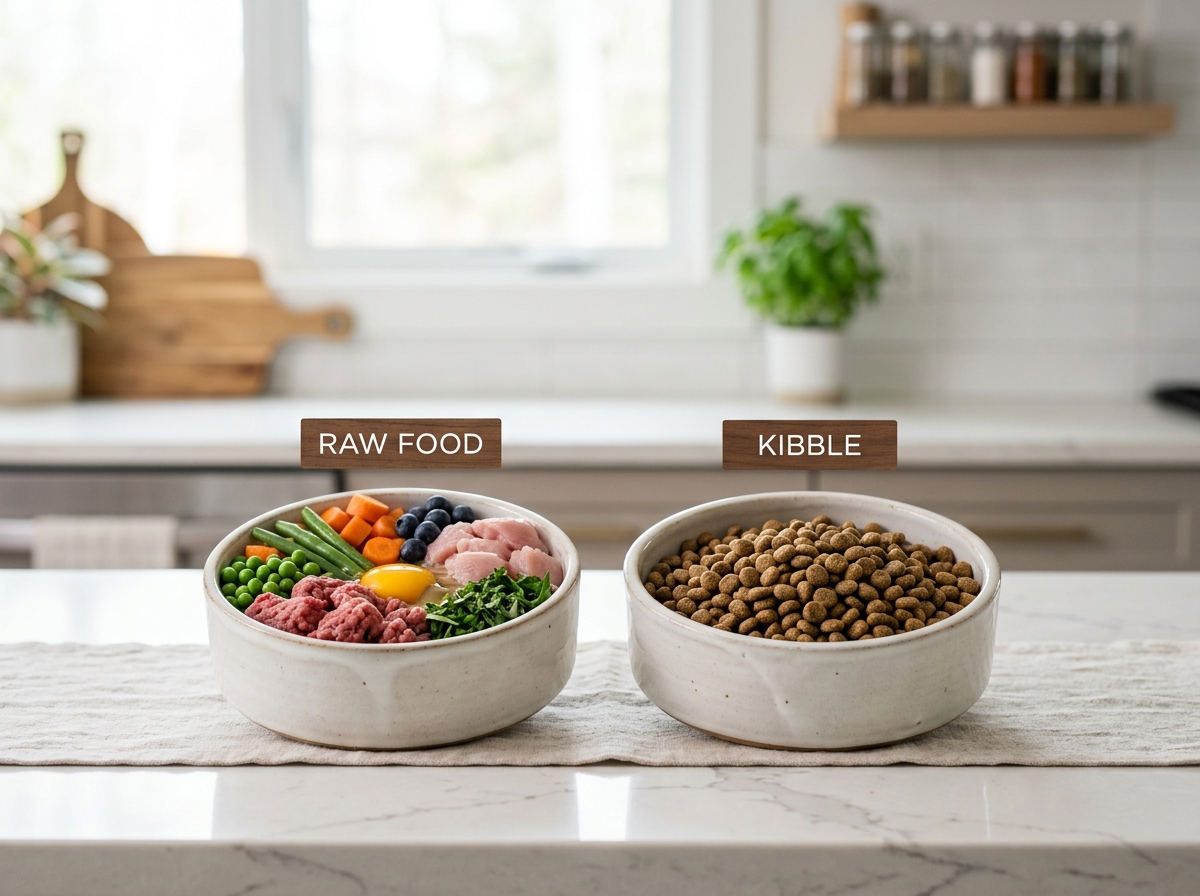
Choosing the right food for your dog is one of the most important decisions you can make as a pet owner. Among the many feeding options available today, two of the most debated choices are raw diets and kibble. Supporters of both sides claim their preferred option offers the best nutrition, health benefits, and overall quality of life for dogs.
So, which one is actually better? In this guide, we’ll compare raw diets and kibble in terms of nutrition, safety, convenience, cost, and overall health benefits to help you make an informed decision.
What Is a Raw Diet for Dogs?
A raw diet, often called the BARF diet (Biologically Appropriate Raw Food or Bones and Raw Food), consists of uncooked ingredients such as:
- Raw muscle meat
- Organ meats
- Raw bones
- Fruits and vegetables
- Eggs
- Fish
The idea behind raw feeding is to mimic what a dog’s ancestors would have eaten in the wild.
Benefits of a Raw Diet
- High protein content
- Fewer processed ingredients
- Improved coat and skin health
- Better dental health due to chewing raw bones
- Smaller and firmer stools
Potential Risks
- Bacterial contamination such as Salmonella or E. coli
- Nutritional imbalances if not properly formulated
- Risk of choking or internal injuries from bones
- More storage and preparation requirements
Raw Diet vs Kibble: Nutritional Comparison


The nutritional quality of a dog’s food plays a significant role in their health.
Raw Diet Nutrition
Raw diets typically contain:
- High-quality animal protein
- Natural fats
- Minimal fillers
- Fresh ingredients
However, homemade raw diets can lack essential nutrients if they are not carefully balanced by a veterinary nutritionist.
Kibble Nutrition
Quality kibble is designed to provide complete and balanced nutrition. Reputable brands formulate their recipes according to established nutritional guidelines.
Advantages include:
- Consistent nutrient levels
- Added vitamins and minerals
- Longer shelf life
- Easier portion control
The downside is that some lower-quality kibble products may contain artificial additives, fillers, and lower-grade ingredients.
Safety Considerations
Food safety is a major factor when comparing raw diets and kibble.
Raw Diet Safety
Raw food may contain harmful bacteria that can affect both pets and humans. Households with children, elderly family members, or individuals with weakened immune systems should be especially cautious.
Safe handling practices include:
- Washing hands thoroughly
- Sanitizing feeding areas
- Proper food storage and thawing
Kibble Safety
Kibble is generally safer because it undergoes cooking and processing that eliminate most harmful pathogens. While recalls can occasionally occur, commercially produced kibble remains a convenient and relatively low-risk feeding option.
Cost Comparison
The cost difference between raw diets and kibble can be significant.
Raw Diet Costs
Raw feeding often requires:
- Fresh meat purchases
- Specialized supplements
- Freezer storage
- Additional preparation time
Large-breed dogs can make raw feeding particularly expensive.
Kibble Costs
Kibble is usually more budget-friendly and widely available. Premium kibble brands cost more than standard options but are still often less expensive than a properly balanced raw diet.
Convenience and Lifestyle Factors


Your lifestyle may influence which feeding method works best.
Raw Diet Convenience
Raw feeding requires:
- Meal planning
- Refrigeration or freezing
- Careful handling
- Extra cleanup
For busy pet owners, maintaining a raw feeding routine can be challenging.
Kibble Convenience
Kibble offers:
- Easy storage
- Quick serving
- Simple travel feeding
- Minimal cleanup
This convenience makes kibble the preferred choice for many dog owners.
Which Option Is Better for Your Dog?
There is no universal answer because every dog has unique nutritional needs.
A raw diet may be beneficial for owners who:
- Have time to prepare meals
- Understand canine nutrition
- Can maintain proper food safety practices
Kibble may be ideal for owners who:
- Need a convenient feeding solution
- Want balanced nutrition without extensive preparation
- Have budget considerations
Many veterinarians recommend high-quality commercial diets because they provide consistent nutrition while minimizing food safety risks.
Can You Combine Raw and Kibble?
Some dog owners choose a mixed-feeding approach, combining kibble with fresh foods or occasional raw meals. This method may provide additional variety while maintaining the convenience and nutritional balance of commercial food.
Before making significant dietary changes, consult your veterinarian to ensure your dog’s nutritional requirements are being met.
Final Thoughts
The debate over raw diet vs kibble continues among pet owners and experts alike. Raw diets offer natural ingredients and high protein levels, while kibble provides convenience, safety, and balanced nutrition. The best choice depends on your dog’s health, your lifestyle, and your ability to meet their dietary needs consistently.
Ultimately, a healthy dog is one that receives complete nutrition, regular veterinary care, and a feeding plan tailored to their individual needs.