Keeping your dog’s nails properly trimmed is an essential part of pet care. Overgrown nails can cause discomfort, affect your dog’s posture, and even lead to injuries. While many pet owners feel nervous about trimming their dog’s nails, the process can be simple and stress-free with the right approach.
Why Regular Nail Trimming Matters


Regular nail maintenance offers several benefits:
- Prevents painful nail splitting and cracking
- Improves walking posture and balance
- Reduces the risk of nails snagging on carpets or furniture
- Protects floors and household surfaces from scratches
- Promotes overall paw health
A good rule of thumb is that if you can hear your dog’s nails clicking on hard floors, they are probably too long.
How Often Should You Trim Your Dog’s Nails?
The frequency depends on your dog’s lifestyle, breed, and activity level. Most dogs require nail trimming every 3 to 6 weeks. Active dogs that frequently walk on concrete may naturally wear down their nails, while indoor dogs often need more frequent trims.
Monitor nail length regularly and adjust the trimming schedule as needed.
Tools You’ll Need
Before you begin, gather the following supplies:
- Dog nail clippers or a nail grinder
- Styptic powder to stop bleeding if needed
- Treats for positive reinforcement
- A towel or blanket for comfort and restraint
- Good lighting
Using high-quality grooming tools can make the process easier and safer.
Step-by-Step Guide to Trimming Dog Nails
1. Create a Calm Environment
Choose a quiet area where your dog feels comfortable. Allow your dog to sniff the nail trimmer and reward calm behavior with treats.
2. Hold the Paw Gently
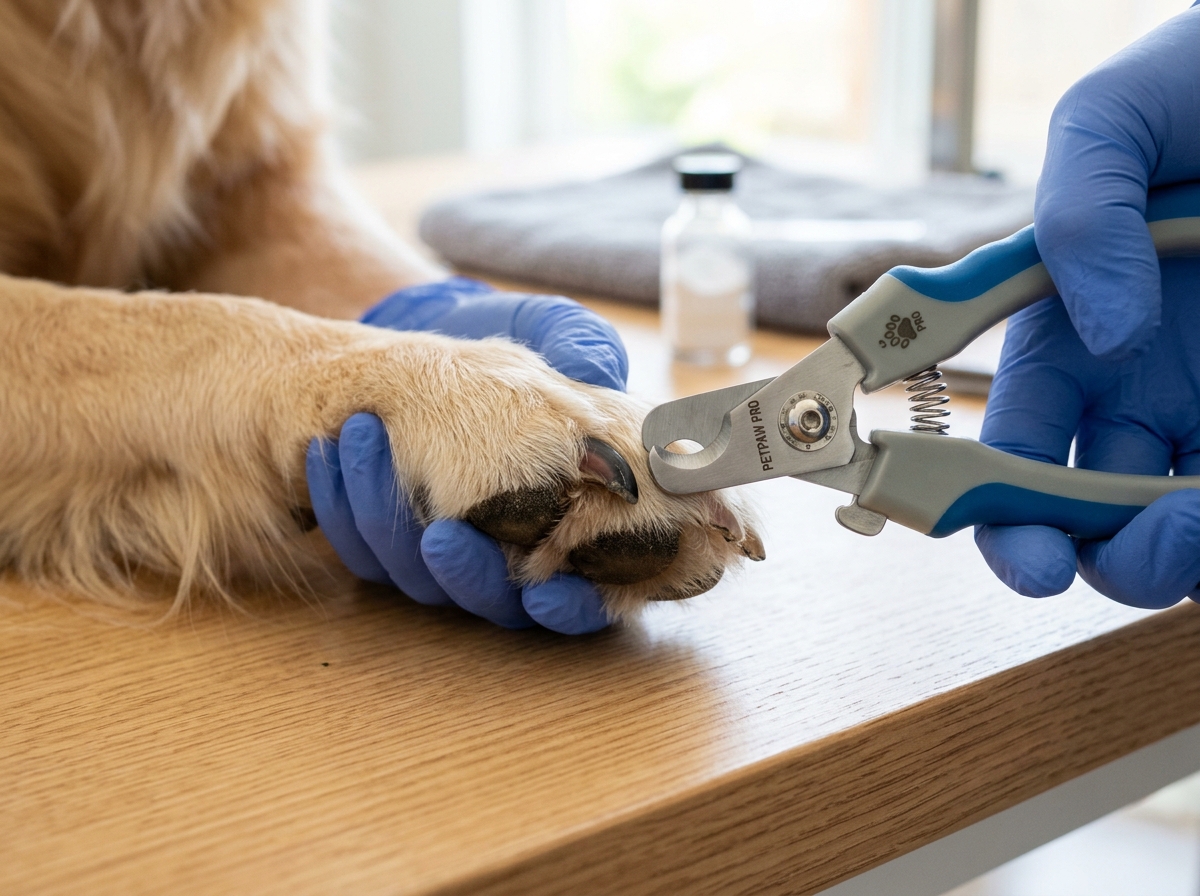
Take your dog’s paw and apply gentle pressure to extend the nail. Be calm and confident to help your dog remain relaxed.
3. Identify the Quick
The quick is the sensitive blood vessel inside the nail. In light-colored nails, it appears as a pink area. In dark nails, trim only small amounts at a time to avoid cutting too deeply.
4. Trim Small Sections
Cut the tip of the nail at a slight angle. Avoid cutting too close to the quick. It is safer to remove small portions gradually rather than making a large cut.
5. Reward Your Dog
Offer praise and treats after each paw or nail. Positive reinforcement helps your dog associate nail trimming with a pleasant experience.
What to Do If You Cut the Quick
Accidents can happen, even to experienced groomers. If you accidentally cut the quick:
- Stay calm
- Apply styptic powder to the bleeding nail
- Apply gentle pressure for a few minutes
- Comfort and reassure your dog
Bleeding usually stops quickly and rarely causes serious problems.
Signs Your Dog Needs a Nail Trim


Watch for these common signs:
- Clicking sounds on hard floors
- Nails touching the ground while standing
- Difficulty walking comfortably
- Curved or overgrown nails
- Frequent snagging on fabrics or carpets
Addressing these signs early helps prevent discomfort and potential injuries.
Tips for Nervous Dogs
Some dogs are anxious about nail trimming. Try these strategies:
- Introduce nail handling gradually
- Use treats and praise generously
- Trim only one or two nails per session if necessary
- Consider a nail grinder for a smoother experience
- Take breaks when your dog becomes stressed
Patience and consistency are key to building confidence.
When to Seek Professional Help
If your dog is extremely fearful, aggressive, or has very dark nails that make trimming difficult, consider visiting a professional groomer or veterinarian. They can safely trim the nails and demonstrate proper techniques for future grooming sessions.
Conclusion
Regular nail trimming is an important part of keeping your dog healthy, comfortable, and active. With the right tools, patience, and positive reinforcement, most pet owners can safely maintain their dog’s nails at home. By making nail care a routine part of grooming, you’ll help your furry friend stay happy and pain-free for years to come.