Bringing home a puppy is an exciting experience, but understanding how quickly your furry friend will grow can be challenging. Different dog breeds grow at different rates, and knowing what to expect can help you provide the right nutrition, exercise, and care throughout each stage of development.
In this guide, we’ll explore puppy growth charts by breed, growth milestones, and factors that influence your puppy’s size and weight.
Why Puppy Growth Charts Matter
A puppy growth chart helps pet owners track their dog’s development from birth to adulthood. Monitoring growth can help identify potential health issues, nutritional deficiencies, or weight problems before they become serious.
Benefits of tracking puppy growth include:
- Monitoring healthy weight gain
- Ensuring proper nutrition
- Identifying growth abnormalities
- Planning feeding schedules
- Understanding adult size expectations
Puppy Growth Stages


Every puppy goes through several growth stages:
0–8 Weeks: Neonatal Stage
- Rapid growth and development
- Puppies rely entirely on their mother
- Eyes and ears begin to open
- Social skills start developing
2–6 Months: Fast Growth Stage
- Most rapid weight gain occurs
- Adult teeth begin replacing puppy teeth
- Increased energy and curiosity
6–12 Months: Adolescent Stage
- Growth starts slowing down
- Muscle development increases
- Behavioral training becomes important
12–24 Months: Maturity Stage
- Most breeds reach adult height
- Large and giant breeds continue filling out
- Full physical maturity is achieved
Puppy Growth Chart by Breed
The following chart provides average growth expectations for popular dog breeds.
| Breed | Weight at 3 Months | Weight at 6 Months | Adult Weight | Full Growth Age |
|---|---|---|---|---|
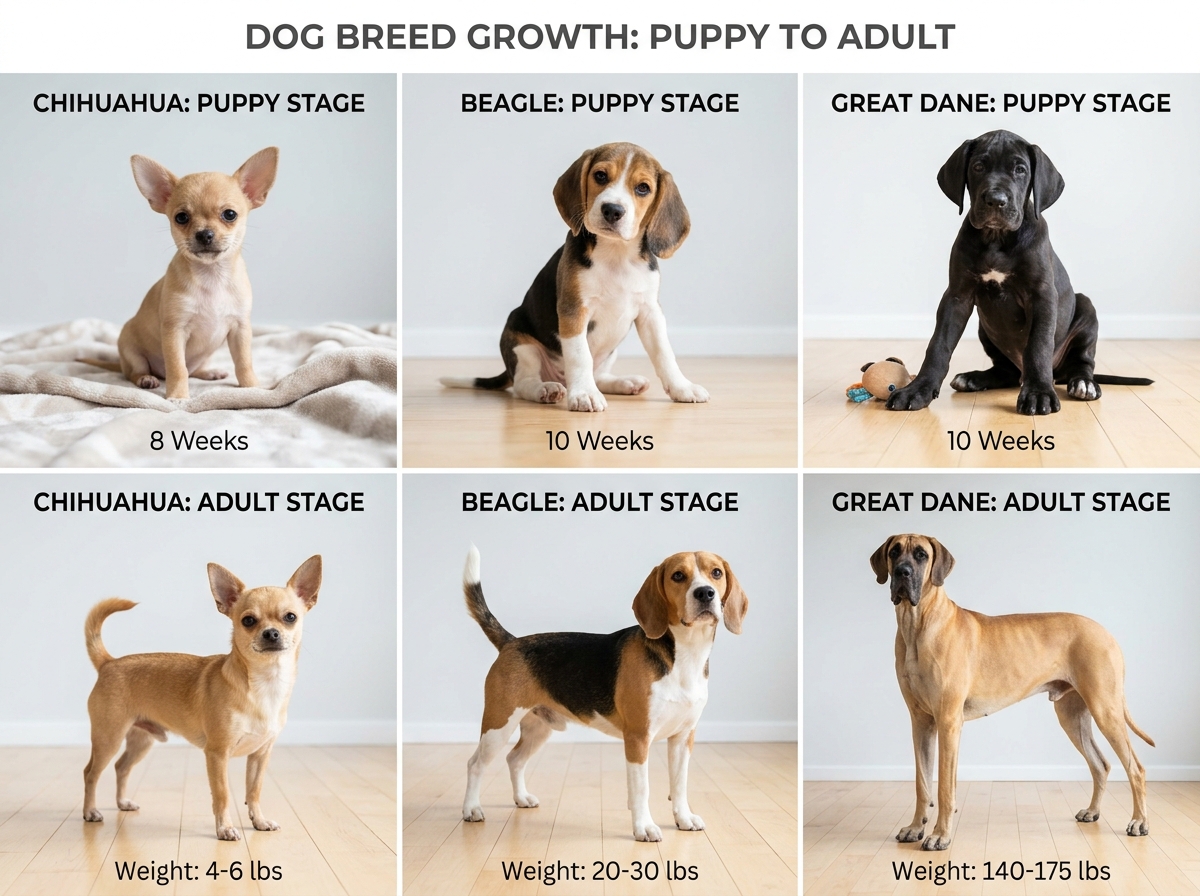
| Chihuahua | 1–3 lbs | 2–5 lbs | 3–6 lbs | 8–10 months |
| Pomeranian | 2–4 lbs | 3–6 lbs | 3–7 lbs | 10–12 months |
| Beagle | 10–15 lbs | 15–25 lbs | 20–30 lbs | 12–15 months |
| Cocker Spaniel | 12–18 lbs | 20–28 lbs | 25–35 lbs | 12–15 months |
| Labrador Retriever | 25–35 lbs | 40–55 lbs | 55–80 lbs | 18–24 months |
| Golden Retriever | 20–35 lbs | 35–55 lbs | 55–75 lbs | 18–24 months |
| German Shepherd | 20–35 lbs | 40–60 lbs | 50–90 lbs | 18–24 months |
| Boxer | 20–30 lbs | 40–55 lbs | 55–70 lbs | 18–24 months |
| Rottweiler | 30–40 lbs | 50–70 lbs | 80–135 lbs | 18–24 months |
| Great Dane | 35–55 lbs | 65–100 lbs | 110–175 lbs | 24 months |
Growth Differences Between Small, Medium, and Large Breeds


Small Breeds
Small dogs mature quickly and often reach adult size before their first birthday.
Examples:
- Chihuahua
- Yorkshire Terrier
- Pomeranian
Medium Breeds
Medium-sized dogs typically reach maturity between 12 and 18 months.
Examples:
- Beagle
- Border Collie
- Cocker Spaniel
Large and Giant Breeds
Large breeds continue growing for up to two years and require specially formulated puppy food to support healthy bone development.
Examples:
- Labrador Retriever
- German Shepherd
- Great Dane
Factors That Affect Puppy Growth
Genetics
A puppy’s parents are the strongest indicator of adult size and weight.
Nutrition
High-quality puppy food provides essential nutrients needed for healthy development.
Exercise
Regular activity promotes muscle growth and overall fitness while preventing obesity.
Health Conditions
Parasites, illnesses, and hormonal disorders may affect growth rates.
Spaying and Neutering
The timing of spaying or neutering can slightly influence growth patterns in some breeds.
How to Estimate Your Puppy’s Adult Size
A common method is:
- Small breeds: Double weight at 12 weeks.
- Medium breeds: Double weight at 16 weeks.
- Large breeds: Double weight at 20 weeks.
While this estimate is helpful, genetics ultimately determine final adult size.
Signs of Healthy Puppy Growth
Look for these indicators:
- Consistent weight gain
- Bright eyes and healthy coat
- Good appetite
- Active and playful behavior
- Steady increase in height and muscle mass
Consult your veterinarian if your puppy experiences sudden weight loss, poor appetite, or significantly slower growth than expected.
Puppy Feeding Tips for Proper Growth
Up to 3 Months
- Feed 4 meals per day
3–6 Months
- Feed 3 meals per day
6–12 Months
- Feed 2 meals per day
After 12 Months
- Transition to adult dog food as recommended by your veterinarian
Always provide fresh water and avoid overfeeding, as excessive weight gain can strain developing joints.
Frequently Asked Questions
At What Age Do Puppies Stop Growing?
Most small breeds stop growing around 10–12 months, while large breeds may continue growing until 18–24 months.
Why Is My Puppy Smaller Than the Growth Chart?
Growth charts provide averages. Genetics, nutrition, and overall health can cause individual variations.
Can Puppies Grow Too Fast?
Yes. Excessive calorie intake, especially in large breeds, can lead to joint and bone problems.
Final Thoughts
Understanding a puppy growth chart by breed helps you monitor your dog’s development and provide the best possible care. While every puppy grows at its own pace, tracking weight, height, and overall health ensures they stay on the path to becoming a healthy adult dog. By combining proper nutrition, regular veterinary care, and plenty of exercise, you’ll give your puppy the strongest foundation for a long and happy life.