Pumpkin is one of the most nutritious and dog-friendly foods you can add to your pet’s diet. Packed with vitamins, minerals, and fiber, pumpkin can support digestion, improve overall health, and even help manage certain common canine health issues. Whether served fresh, cooked, or canned, pumpkin can be a healthy treat when given in moderation.
In this guide, we’ll explore the benefits of pumpkin for dogs, how to feed it safely, and important precautions every pet owner should know.
Why Is Pumpkin Good for Dogs?
Pumpkin contains several essential nutrients that contribute to your dog’s well-being. It is rich in:
- Vitamin A for healthy vision and immune function
- Vitamin C for immune support
- Vitamin E for skin and coat health
- Potassium for muscle function
- Iron and other minerals
- Dietary fiber for digestive health
Because pumpkin is low in calories and high in nutrients, it can be a healthy addition to most dogs’ diets.
Digestive Benefits of Pumpkin for Dogs
One of the most well-known benefits of pumpkin is its positive effect on digestion.
Helps Relieve Constipation
The fiber in pumpkin can add bulk to your dog’s stool and encourage regular bowel movements. If your dog experiences mild constipation, a small amount of pumpkin may help get things moving again.
May Help With Diarrhea
Pumpkin contains soluble fiber, which absorbs excess water in the digestive tract. This can help firm up loose stools and reduce episodes of mild diarrhea.
Supports Gut Health
The fiber found in pumpkin acts as a prebiotic, helping support beneficial bacteria in your dog’s digestive system.
Pumpkin for Weight Management
If your dog needs to lose weight, pumpkin can be a useful dietary addition. Since it is low in calories but high in fiber, pumpkin helps dogs feel full for longer periods.
Many pet owners mix a small amount of pumpkin into regular dog food to increase satiety without adding excessive calories.
Nutritional Benefits Beyond Digestion
Supports Eye Health
Pumpkin is rich in beta-carotene, which the body converts into Vitamin A. This nutrient helps maintain healthy vision and supports immune function.
Promotes Healthy Skin and Coat
The vitamins and antioxidants in pumpkin contribute to healthier skin and a shinier coat.
Boosts Immune Function
The combination of vitamins A, C, and E provides antioxidant support that helps protect cells from damage and strengthens the immune system.
How to Feed Pumpkin to Dogs
There are several safe ways to offer pumpkin to your dog:
Plain Cooked Pumpkin
Fresh pumpkin that has been cooked and mashed is a healthy option.
100% Pure Pumpkin Puree
Canned pumpkin puree is convenient and nutritious. Always choose products labeled “100% pumpkin” without added sugars, spices, or sweeteners.
Frozen Pumpkin Treats
You can freeze pumpkin puree into small cubes for a refreshing snack during warm weather.
Mixed With Dog Food
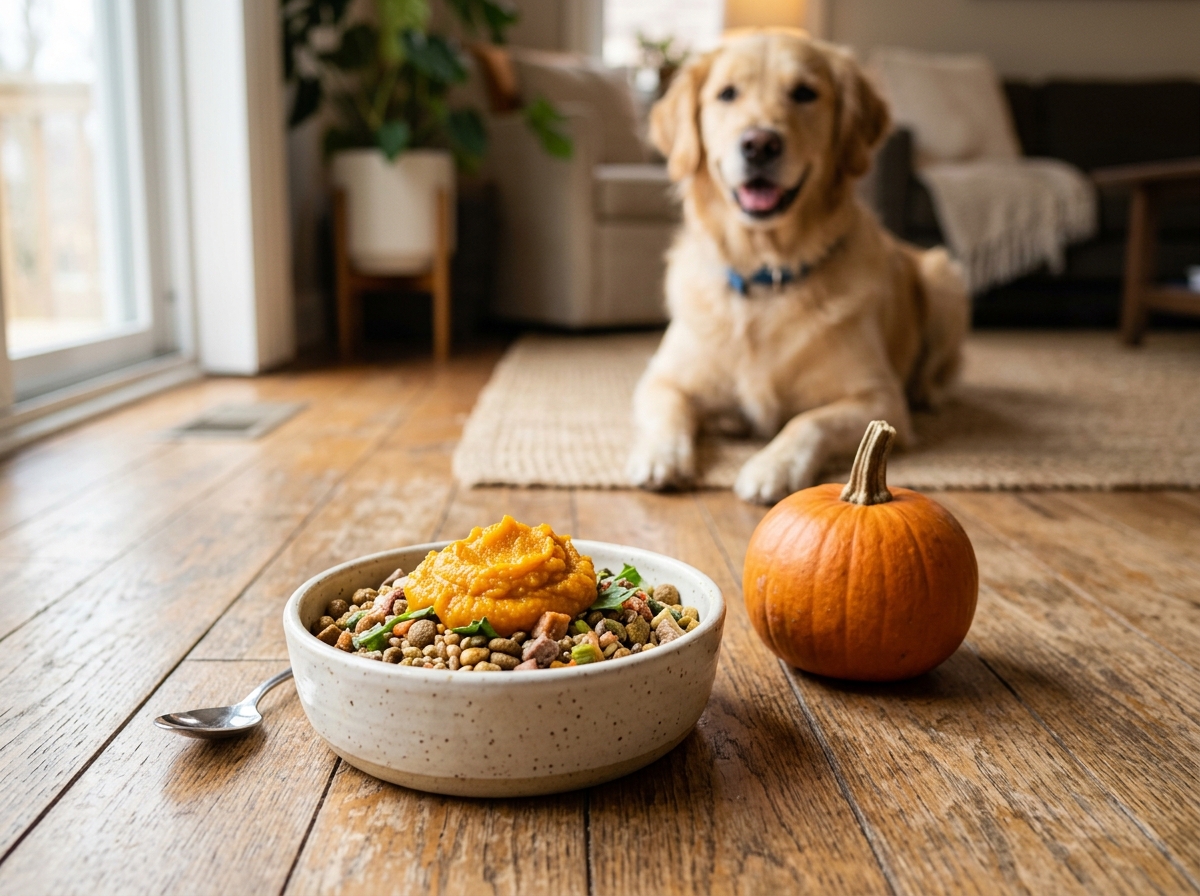
Many dog owners simply mix a spoonful of pumpkin into their dog’s regular meals.
How Much Pumpkin Can Dogs Eat?
Pumpkin should be given in moderation.
General guidelines include:
- Small dogs: 1–2 teaspoons daily
- Medium dogs: 1–2 tablespoons daily
- Large dogs: 2–4 tablespoons daily
Start with small amounts and monitor your dog’s response.
Can Dogs Eat Pumpkin Seeds?
Yes, plain pumpkin seeds can be safe for dogs when properly prepared. They should be:
- Unsalted
- Roasted or cooked
- Served in small quantities
Pumpkin seeds contain healthy fats, antioxidants, and nutrients that may support overall health.
Risks of Feeding Pumpkin to Dogs
Although pumpkin is generally safe, there are some precautions to consider:
Avoid Pumpkin Pie Filling
Pumpkin pie filling often contains sugar, spices, and other ingredients that may be harmful to dogs.
Watch Portion Sizes
Too much pumpkin can cause digestive upset, including gas or diarrhea.
Check for Allergic Reactions
While uncommon, some dogs may be sensitive to pumpkin. Introduce it gradually and watch for signs of digestive discomfort.
Signs Your Dog May Benefit From Pumpkin
Your dog may benefit from pumpkin if they experience:
- Mild constipation
- Occasional diarrhea
- Weight management challenges
- Digestive irregularities
- Need for additional dietary fiber
However, persistent digestive issues should always be evaluated by a veterinarian.
Frequently Asked Questions
Can Puppies Eat Pumpkin?
Yes, puppies can eat small amounts of plain pumpkin. Introduce it gradually and consult your veterinarian if you have concerns.
Is Canned Pumpkin Safe for Dogs?
Yes, as long as it is 100% pure pumpkin with no added sugar, spices, or artificial ingredients.
Can Dogs Eat Raw Pumpkin?
Small amounts of raw pumpkin are generally safe, but cooked pumpkin is easier to digest and often preferred.
Final Thoughts
Pumpkin is a nutritious, affordable, and versatile food that can provide several health benefits for dogs. From supporting digestive health to helping with weight management, pumpkin can be a valuable addition to your pet’s diet when fed appropriately. Always choose plain pumpkin products, introduce them gradually, and consult your veterinarian if your dog has ongoing health concerns.
With proper use, pumpkin can be a simple and healthy way to support your dog’s overall well-being.