Bringing a puppy home is an exciting experience, and keeping them clean is an important part of responsible pet ownership. However, bathing a puppy requires a gentle approach to ensure their safety, comfort, and overall well-being. This puppy bathing guide will walk you through everything you need to know, from choosing the right products to making bath time a positive experience.
Why Proper Puppy Bathing Matters
Puppies are naturally curious and often find themselves rolling in dirt, mud, or other messy substances. Regular bathing helps:
- Remove dirt and debris
- Reduce unpleasant odors
- Promote healthy skin and coat
- Allow you to check for skin issues, parasites, or injuries
- Build trust and comfort with grooming routines
While cleanliness is important, over-bathing can strip natural oils from your puppy’s skin, leading to dryness and irritation.
When Should You Give Your Puppy Their First Bath?
Most veterinarians recommend waiting until a puppy is at least 8 weeks old before giving them a full bath. Before this age, puppies have difficulty regulating their body temperature and can become chilled easily.
If your young puppy gets dirty before they are ready for a bath, use a damp cloth or puppy-safe grooming wipes to clean them instead.
Essential Supplies for Puppy Bath Time
Before you begin, gather all the necessary supplies:
- Puppy-specific shampoo
- Soft towels
- Non-slip bath mat
- Brush or comb
- Cup or handheld sprayer for rinsing
- Treats for positive reinforcement
- Hair dryer on a low, cool setting (optional)
Using products specifically designed for puppies helps prevent skin irritation and keeps their coat healthy.
Preparing Your Puppy for a Bath
Preparation can make bath time much easier for both you and your puppy.
Brush Their Coat First
Brushing removes loose fur, dirt, and tangles. This step prevents mats from becoming worse when wet.
Choose the Right Water Temperature
Use lukewarm water. Water that is too hot or too cold can make your puppy uncomfortable and anxious.
Create a Calm Environment
Speak softly and remain patient. Puppies often mirror your energy, so staying relaxed helps them feel secure.
Step-by-Step Puppy Bathing Process
1. Wet the Coat Thoroughly
Gently wet your puppy’s coat while avoiding their eyes, ears, and nose. Use a cup or low-pressure sprayer.
2. Apply Puppy Shampoo
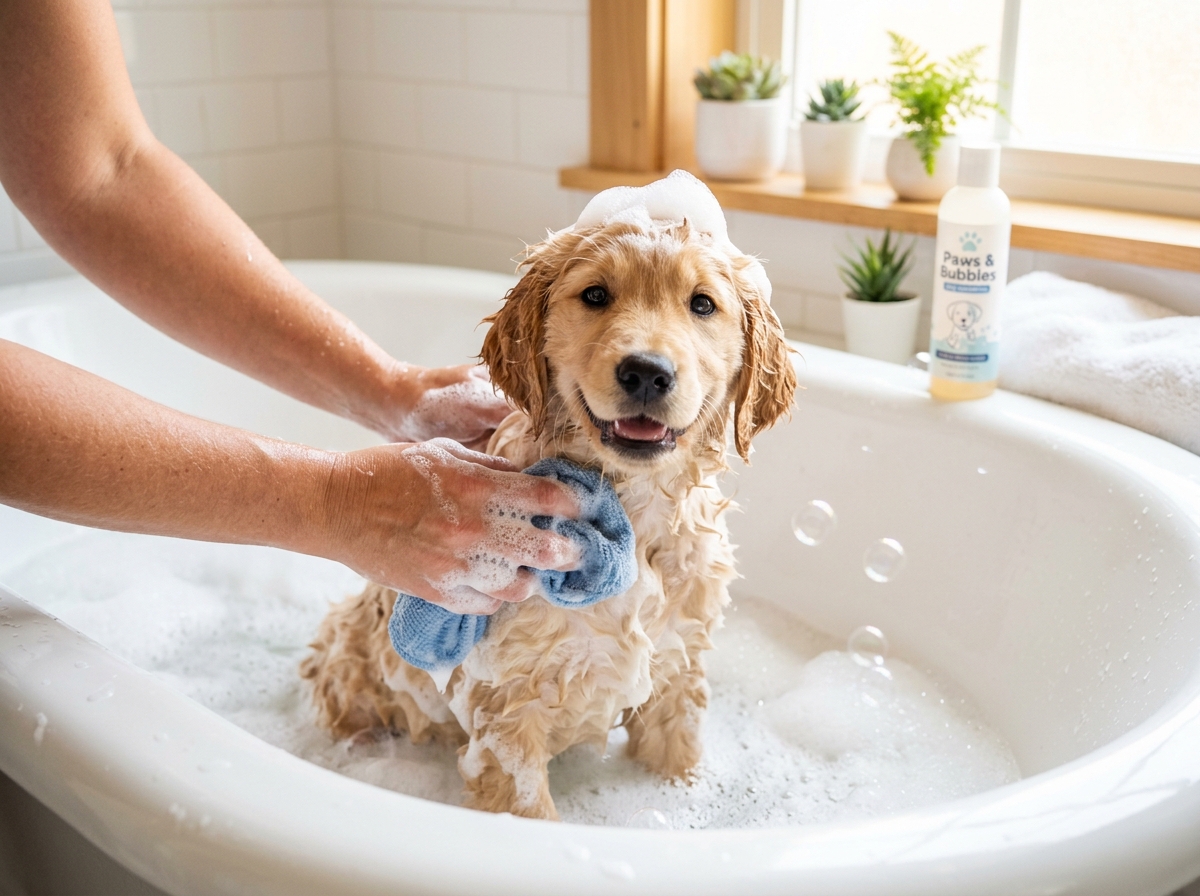
Place a small amount of shampoo in your hands and work it into a gentle lather. Massage it through the coat while paying attention to dirty areas.
3. Clean Carefully Around the Face
Use a damp washcloth to wipe the face rather than pouring water directly over the head.
4. Rinse Completely
Thorough rinsing is essential. Leftover shampoo can cause itching and skin irritation.
5. Dry Your Puppy
Wrap your puppy in a soft towel and gently pat them dry. If using a dryer, keep it on a cool or low setting and maintain a safe distance.
Common Bathing Mistakes to Avoid
- Using human shampoo
- Bathing too frequently
- Getting water into the ears
- Rushing the process
- Leaving shampoo residue behind
- Using water that is too hot or cold
Avoiding these mistakes will help make bath time safer and more enjoyable.
How Often Should You Bathe a Puppy?
The ideal bathing frequency depends on your puppy’s breed, activity level, and coat type. Generally, most puppies only need a bath every 4 to 6 weeks.
You may need more frequent baths if your puppy:
- Spends a lot of time outdoors
- Has a skin condition (follow veterinary advice)
- Gets exceptionally dirty
Over-bathing can remove protective oils and lead to skin problems.
Tips for Making Bath Time Enjoyable
- Reward your puppy with treats and praise
- Start with short bathing sessions
- Keep a consistent routine
- Use toys to distract nervous puppies
- End every bath on a positive note
Positive experiences during puppyhood can help prevent grooming anxiety later in life.
Signs Your Puppy Needs a Bath
Watch for these indicators:
- Strong or unpleasant odor
- Visible dirt on the coat
- Greasy or sticky fur
- Excessive scratching due to dirt buildup
- Mud or debris after outdoor play
Not every dirty puppy needs a full bath, but these signs often indicate it’s time for cleaning.
Final Thoughts
Bathing your puppy doesn’t have to be stressful. With the right preparation, gentle techniques, and puppy-safe products, bath time can become a positive bonding experience. Remember to bathe your puppy only when necessary, use lukewarm water, and always reward good behavior. By following this puppy bathing guide, you’ll help keep your furry friend clean, healthy, and happy for years to come.